Later Ctrl + ↑

AACR 2026. The next step for foundation models toward real-world products
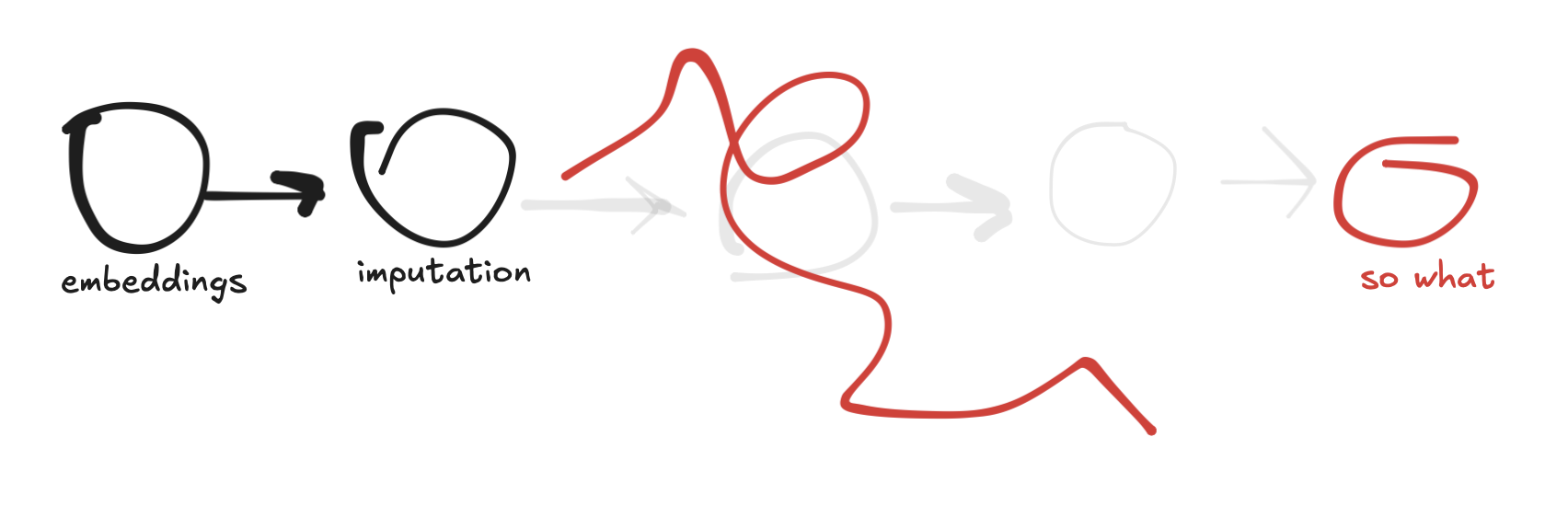
the path from embedding to product is long and difficult

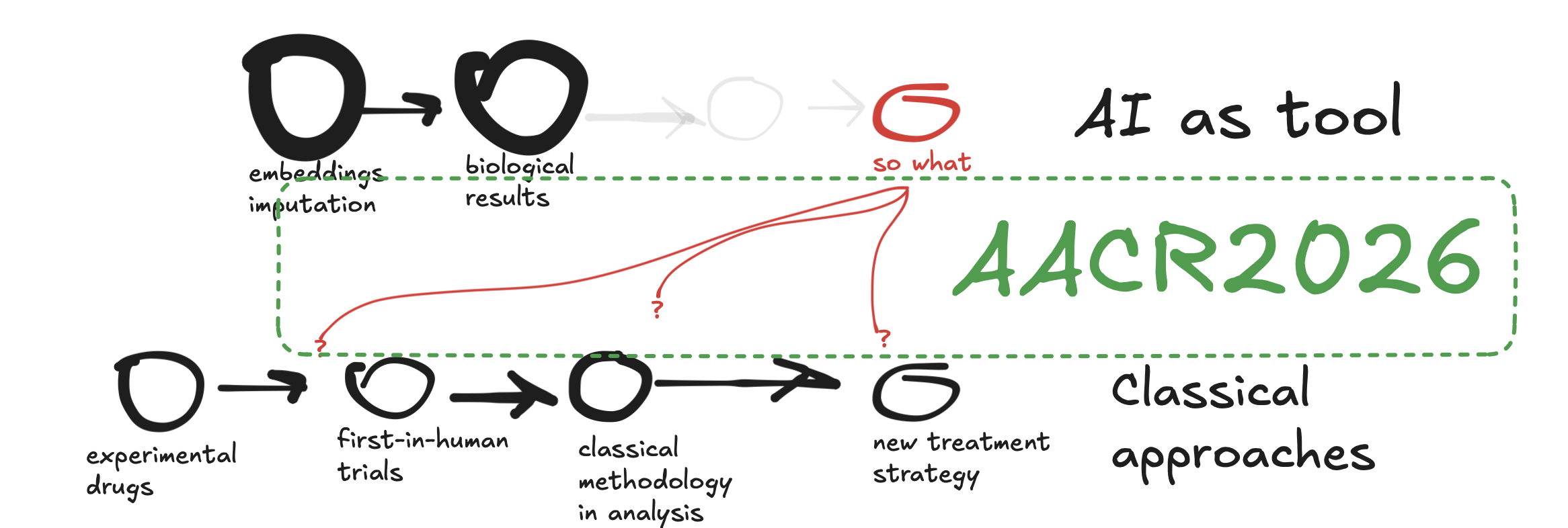
In the world of large models, generating embeddings and imputing data are only early steps. The final product-level steps, such as response prediction, are much more difficult. The hard part is to understand and implement the intermediate steps between imputation and an actual real-world product.

I gathered some thoughts from the AACR 2026 and formulated like this:

How to use embeddings and imputation → to get one step closer to a product.

Synthetic histology slides → against class imbalance

One interesting application of synthetic histology slides is generating slides for rare disease subtypes to overcome class imbalance. The problem is that a rare subtype is… rare. And when training a model, there are not enough samples of the rare subtype for the model to learn it well.

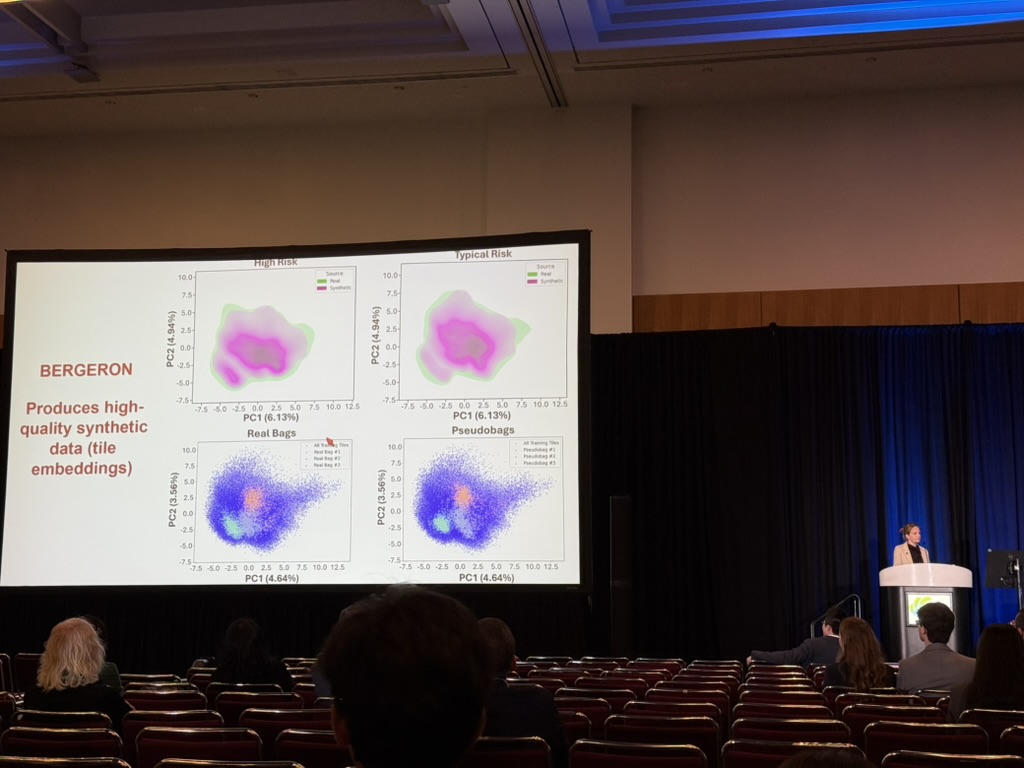
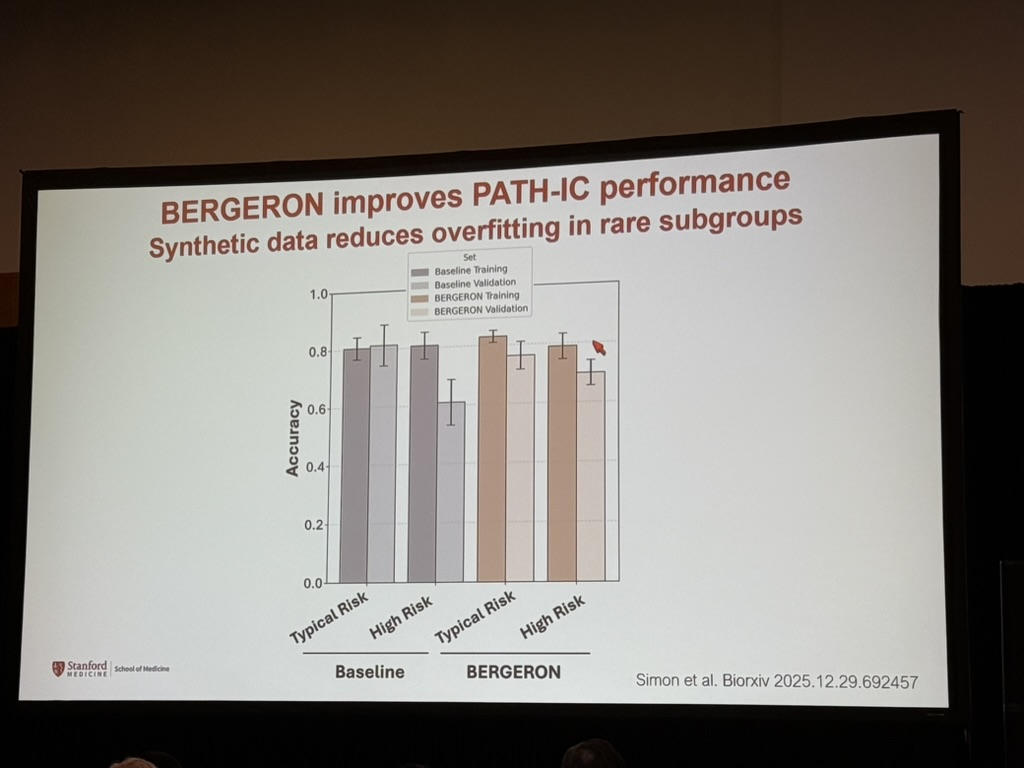
The proposed approach is to generate histology slides of the rare subtype at the dataset preparation stage. In fact, synthetic embeddings of the rare subtype are enough, even without visualization. After adding this extra set of synthetic samples, the main model learns the rare subtype better and predicts it with higher quality.

The paper about the BERGERON and CRAWFORD models from Stanford.
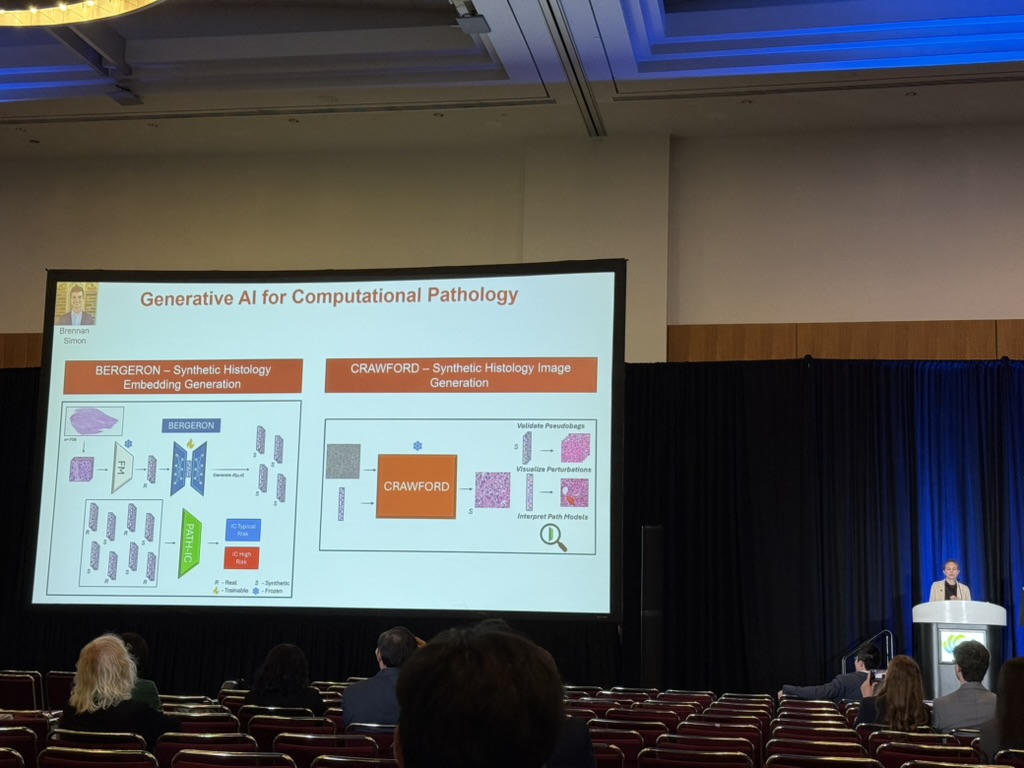
In the images: 1. The general scheme of the two models. BERGERON creates embeddings of real and synthetic histology slides, while CRAWFORD visualizes them. 2. Synthetic embeddings do not batch separately from real ones. 3. The accuracy of rare subtype prediction increased by 0.1 after adding synthetic data.

Attention analysis → for finding contextual, model-derived hypotheses

Model attention analysis is the calculation of features that the model relies on more strongly than others when making a decision.

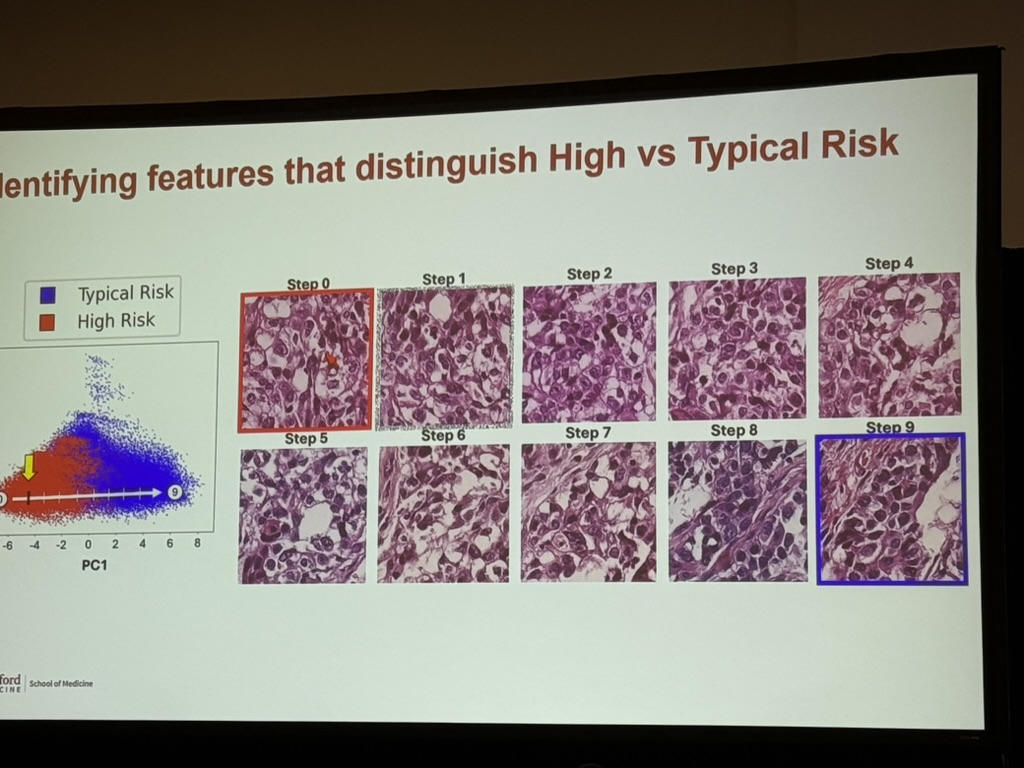
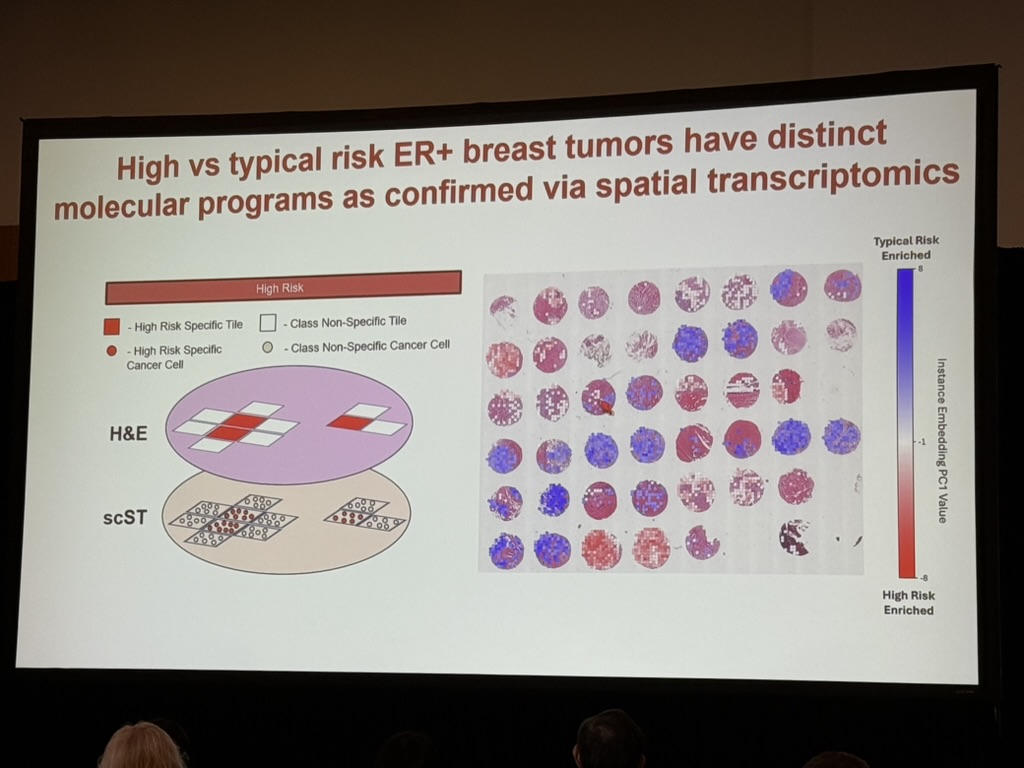
At the level of a single slide, we can ask: what exactly did the model see in this region that is not present elsewhere? At the cohort level: how do low-risk slides differ from high-risk slides? How do malignant regions on slides differ from normal regions? In other words, we compare not one whole slide against another whole slide, but the most interesting regions specifically.
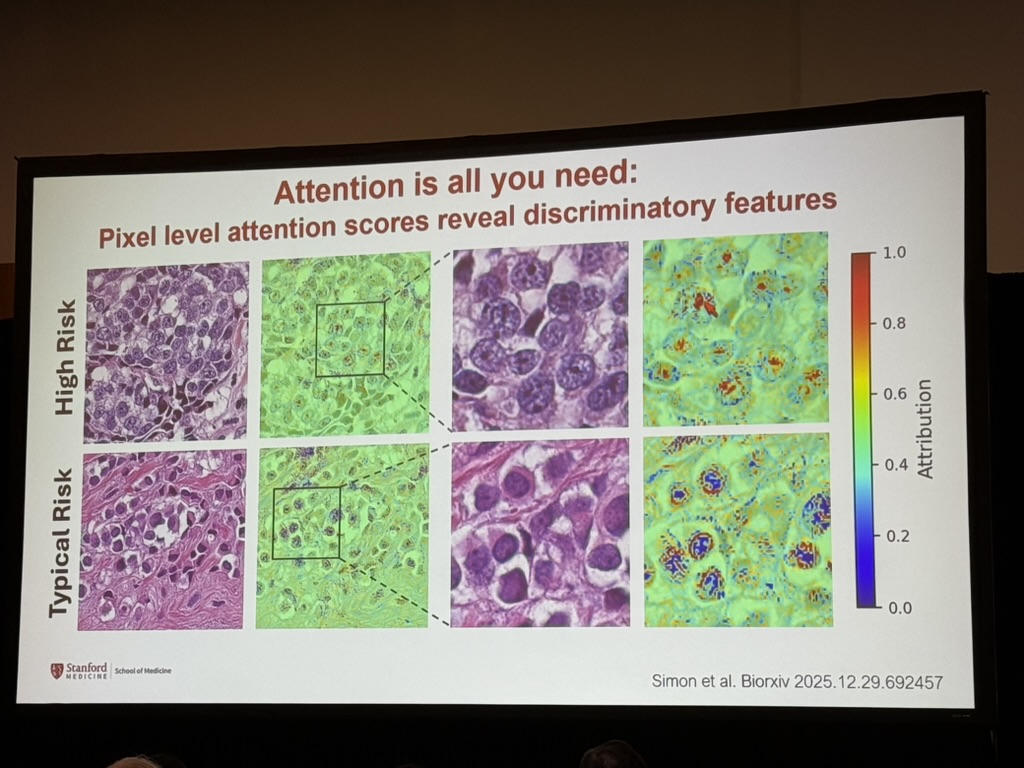
In the images: 1. Visualization of model attention. It is visible that chromatin in the center of the nucleus is the most important feature for high risk. 2. Patches are arranged by decreasing gradient of the feature that is important for risk prediction. Note that the full slide is not shown — only small patches are shown. 3. For samples with paired spatial transcriptomics, gene activity could also be studied. 4. Differential expression analysis is performed specifically for the interesting patches, not across the whole slide, and with a risk-based contrast.

Benchmarking pressure → for directed model development

Every serious talk about new models included the claim: “our model performs better than other methods on benchmarks, look.” Without this validation, the rest of the talk was no longer perceived as convincing.

But it was even more interesting when teams drew a concrete conclusion from this and took the next step, using benchmark insights to improve the model.

Multimodality → works better than a single modality

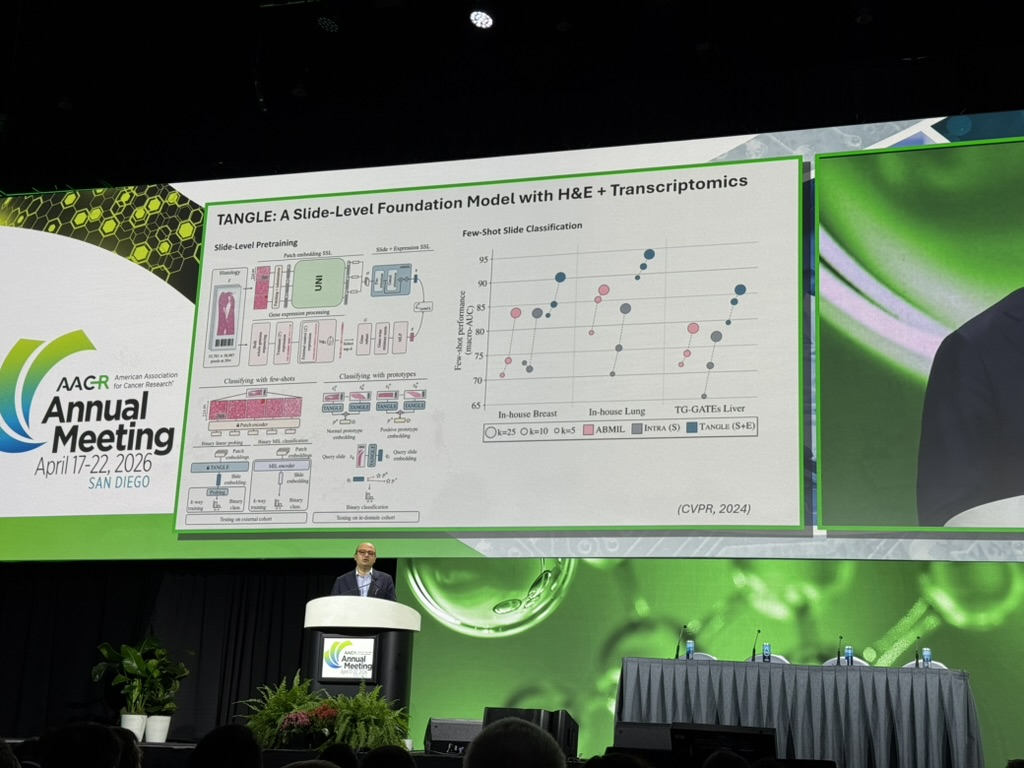
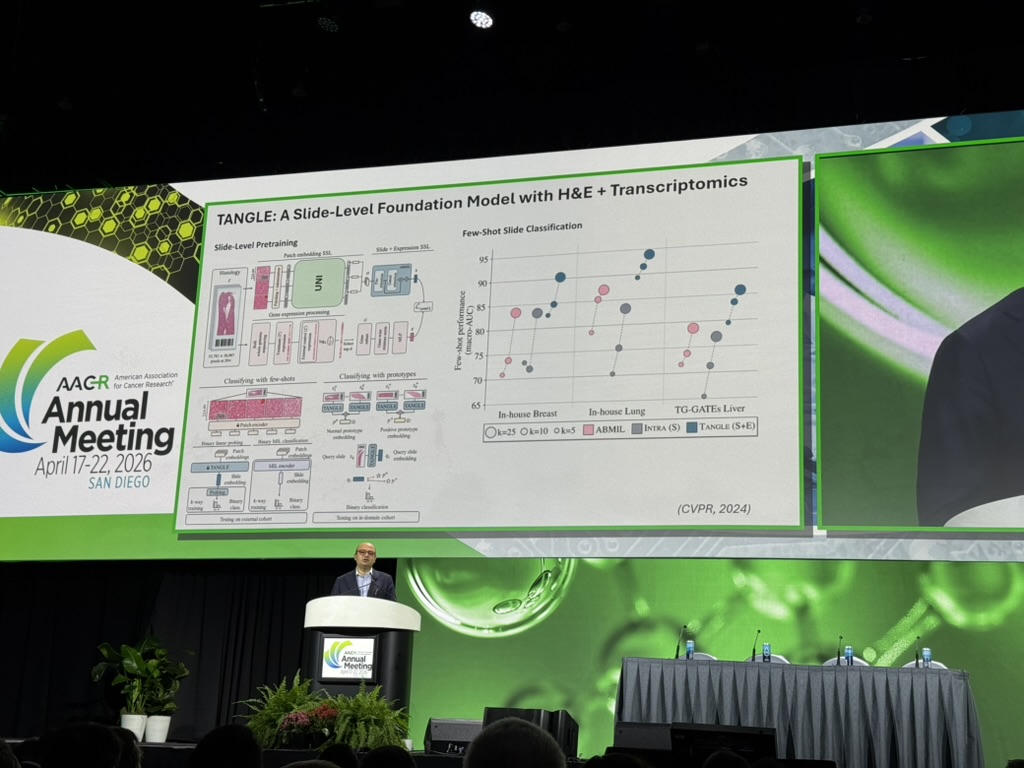
Faisal Mahmood, the father of all AI for pathology, shows in the TANGLE paper that if a model is trained on both histology and transcriptomics, the results are better than with histology alone.
More data → the model works better

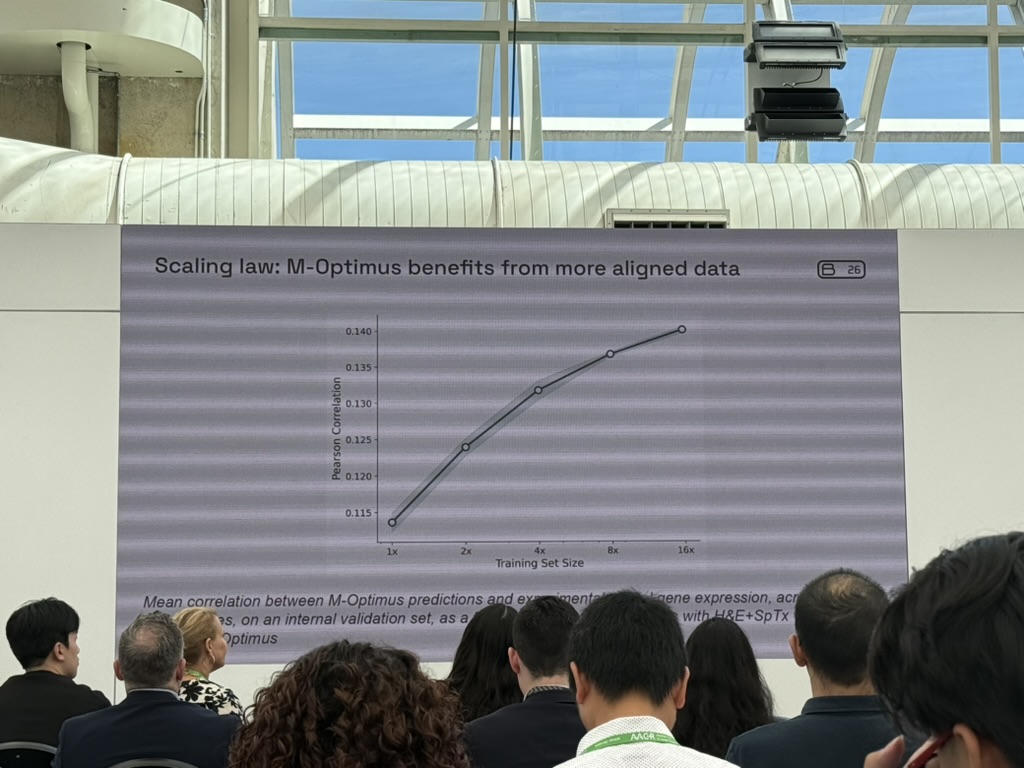
Bioptimus, a French company and creator of commercial AI models, released the M-optimus model and showed that as the training set increases, model performance also improves, and the plateau has not yet been reached. Although I was not impressed by the result: when the training set increased from 8× to 16×, the correlation of imputed spatial expression increased from 0.136 to 0.140? What even is that, lol.
Text descriptions of slides → for better quality with a smaller training set

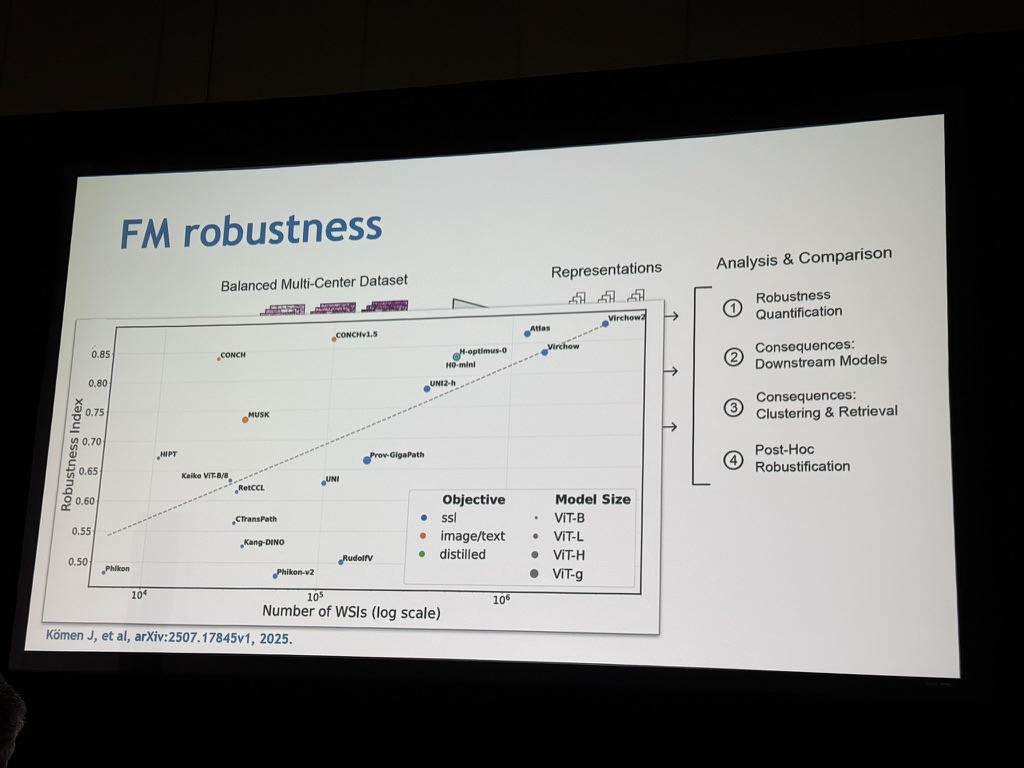
Yana Lipkova gave a review of benchmark reviews for pathology models.

It was interesting that the CONCH model shows performance comparable to top models while using a training set that is an order of magnitude smaller. This was achieved because CONCH was trained on slides with text descriptions, unlike most modern models, which are trained only on images.
CONCH

Working with context and autoregression → for better protein function prediction

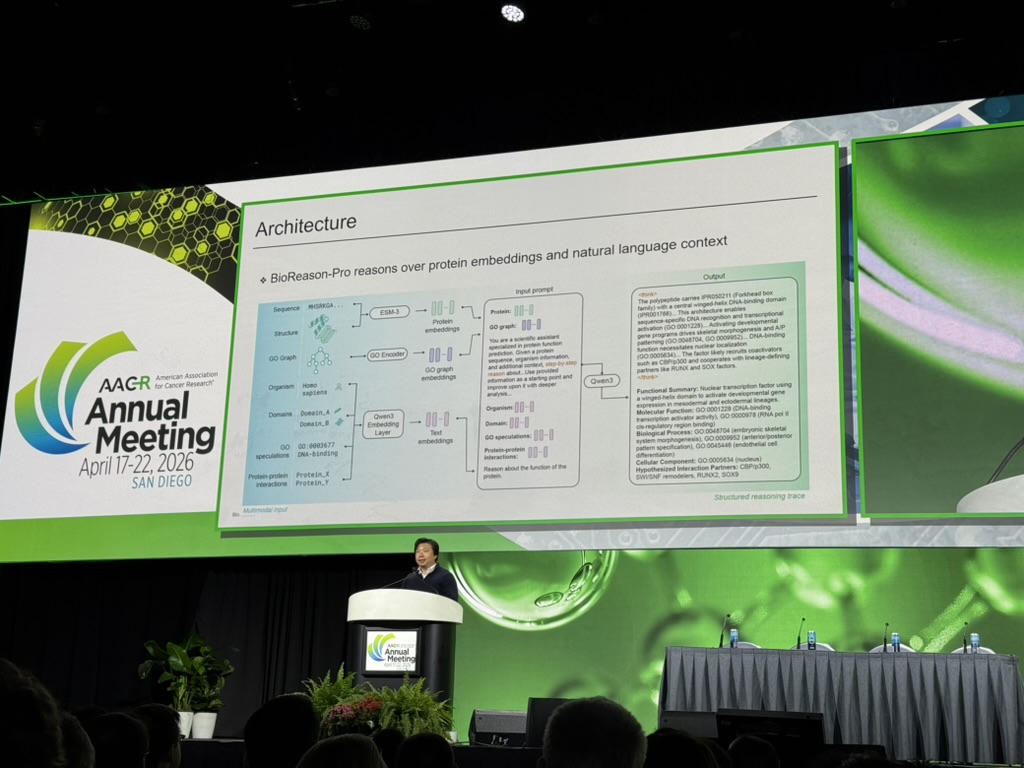
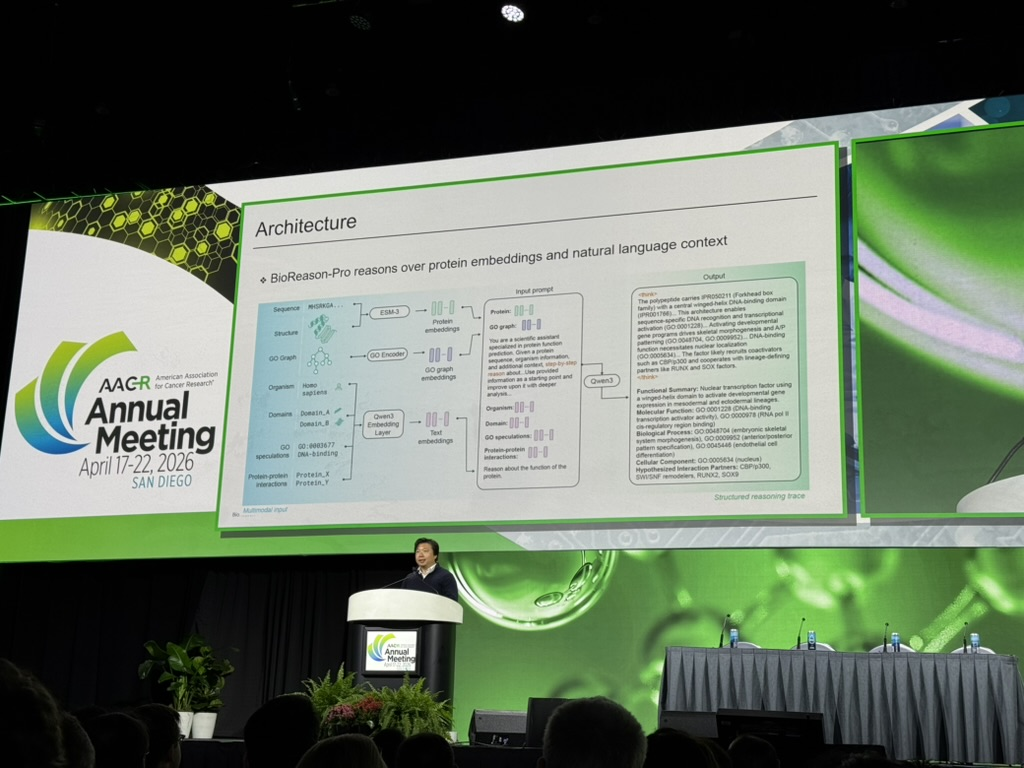
The author of scGPT, Bo Wang, presented the BioReason-Pro work. This is a pipeline that helps describe the function of a protein when its sequence is known, but no wet-lab experiment has been performed yet. The first stage of this pipeline is GO-GPT, a model that generates preliminary hypotheses about protein functions based on the protein sequence.

GO-GPT is an example of directed model development: benchmarks and experience from CAFA-like evaluations showed that flat prediction of Gene Ontology labels is not enough. The authors took the next step: they turned GO annotation into a task of sequential term generation — in other words, they added autoregression so that the architecture itself better matches the structure of Gene Ontology.
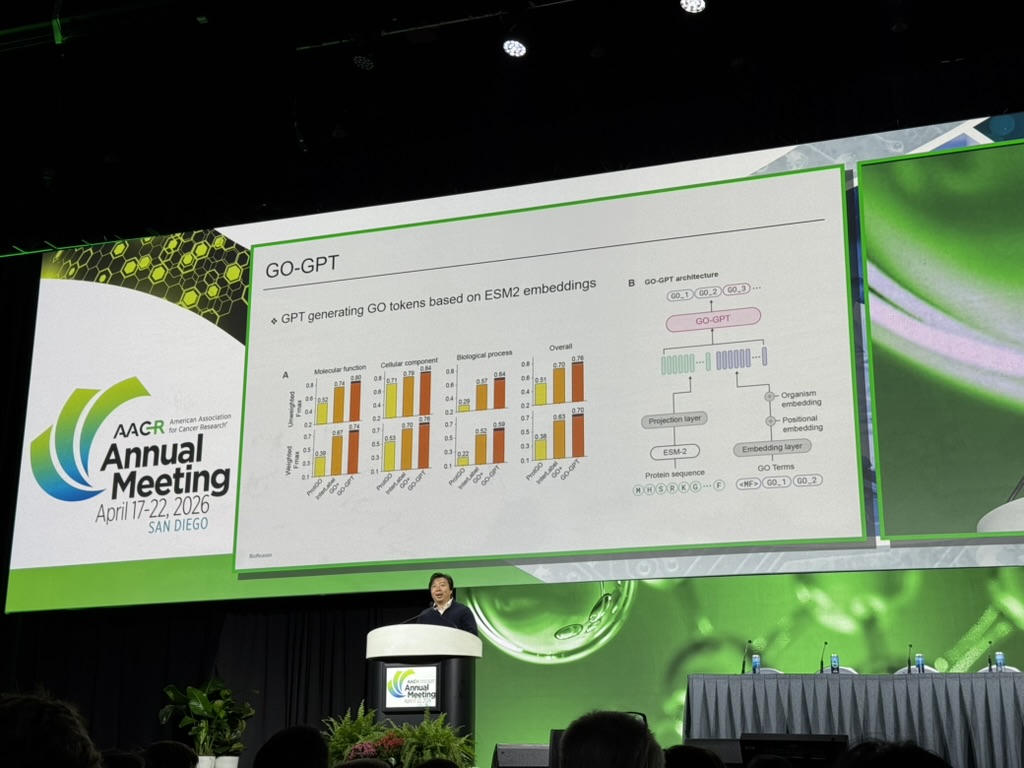
In the images: 1. GO-GPT beats previous SOTA approaches on benchmarks. 2. The architecture of the whole BioReason pipeline. As I understood it, the two upper arrows are GO-GPT, and there is also text embedding preparation; then a giga-prompt is assembled from this and passed into a third model.

AACR 2026 trends

AACR is a large annual oncology conference. This year it took place in San Diego, and 22,000 participants attended the conference.

In 2026, two trends were clearly visible at AACR: impressive results from large biological models, and many new experimental drugs being developed through classical approaches. AACR 2026 tried to find points of connection between these two trends.

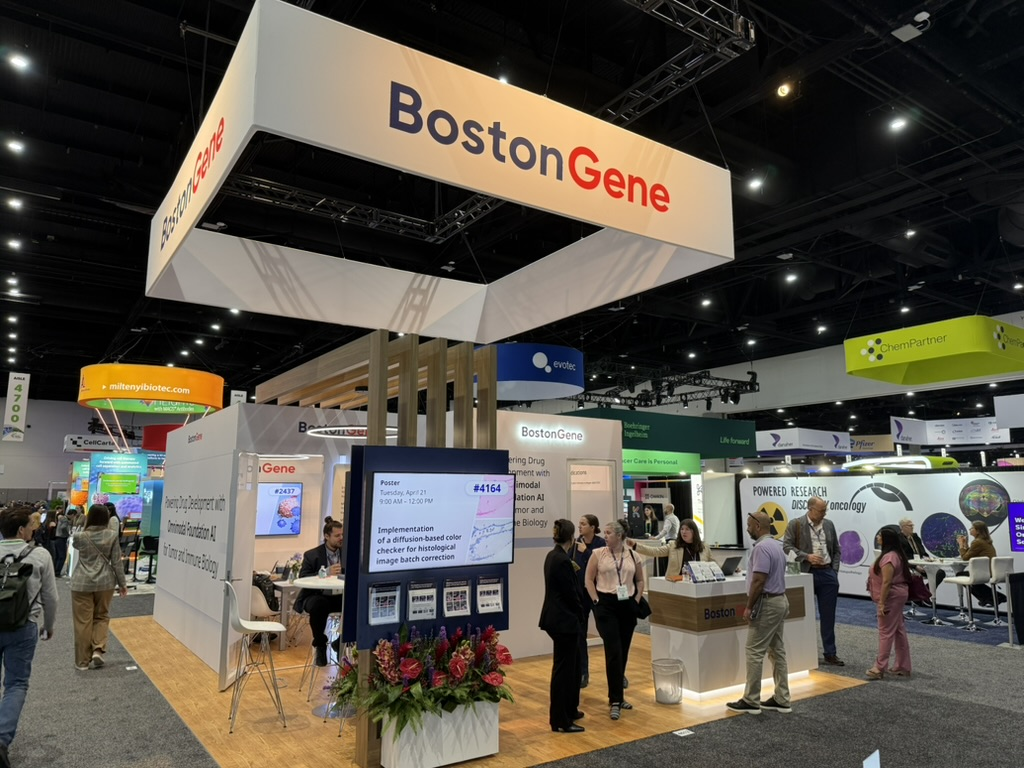
Since BostonGene is taking part in this race from the side of the first trend, offering its expertise and tools to help advance therapies through clinical trial phases, I focused mainly on the AI sessions.

BostonGene came to the conference

Conference Opening

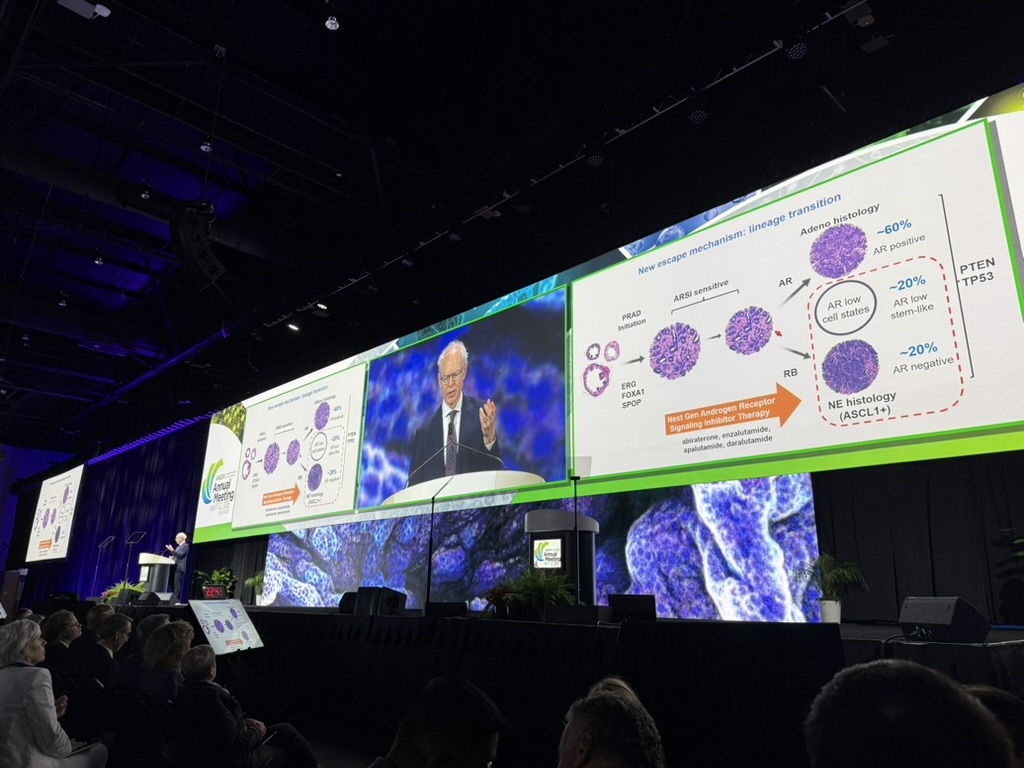
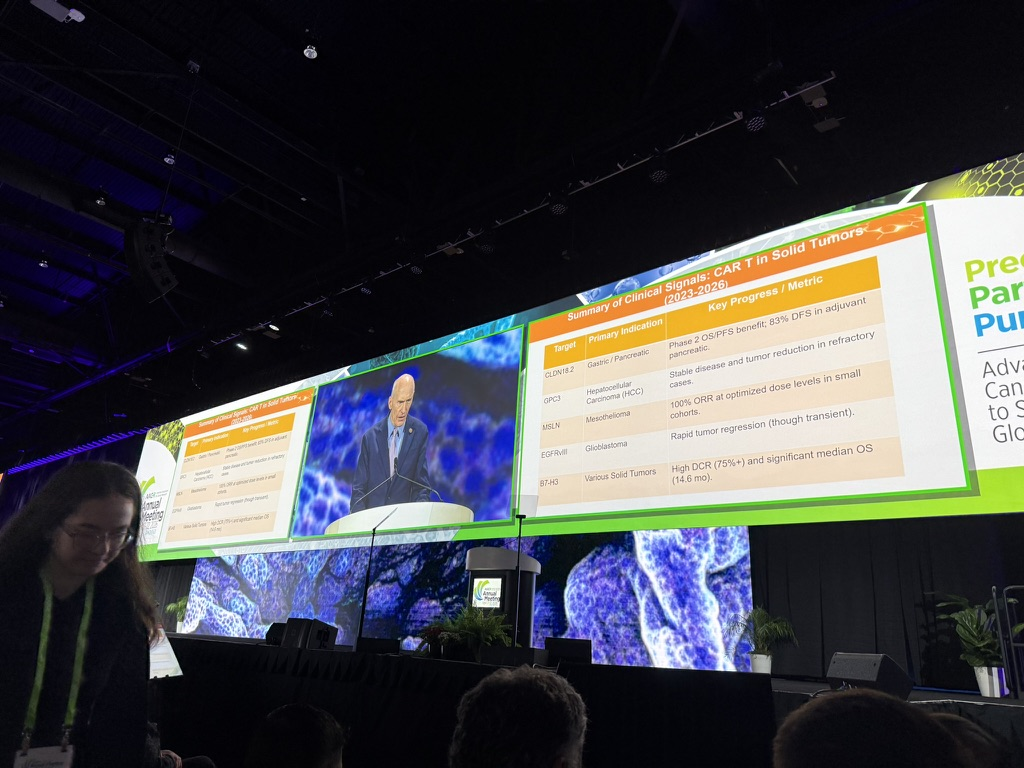
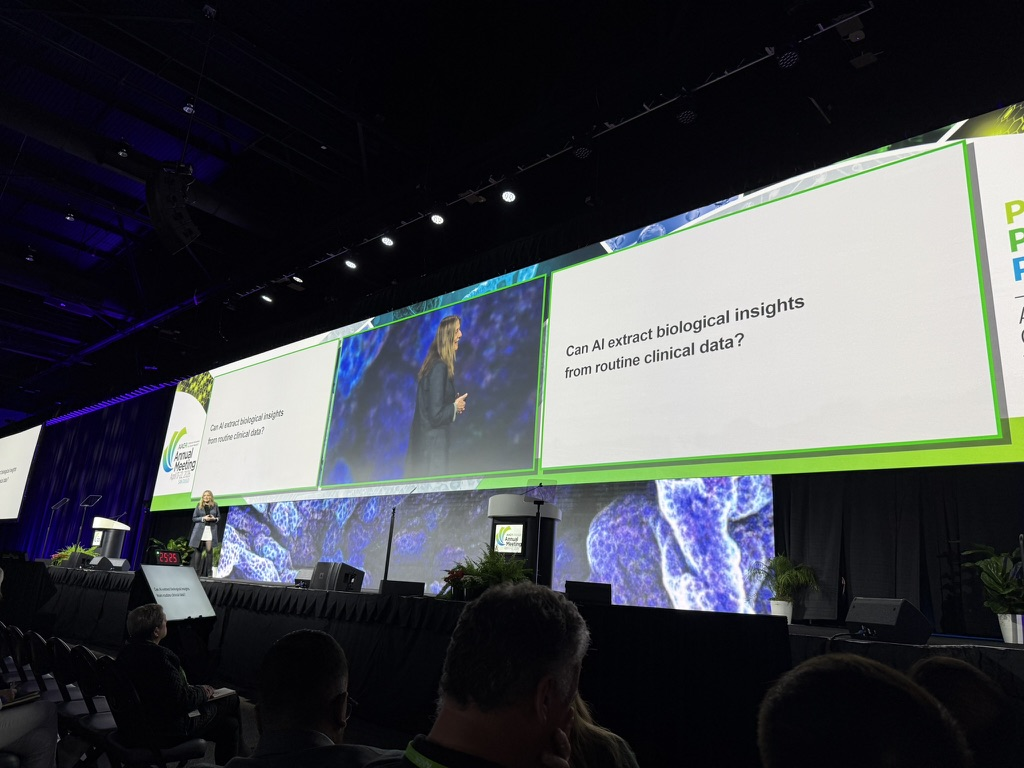
The opening immediately set the tone for the whole conference. Three speakers showed that challenges in oncology still remain and discoveries happen every year, while the arms race does not stop either: new drugs are also being developed every year. The question is: can AI help us with this?

Challenges in oncology still exist. Prostate cancer develops resistance to AR inhibitors by changing its histology.
Drug development is not standing still. CAR-T therapies for solid tumors are being actively tested.
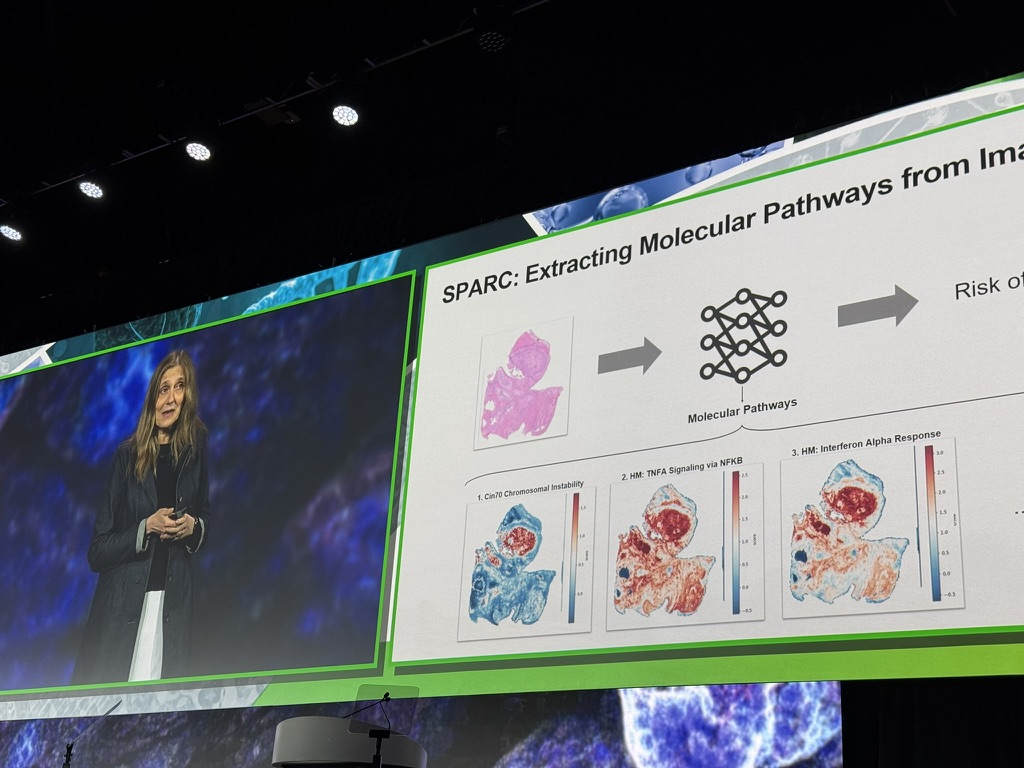
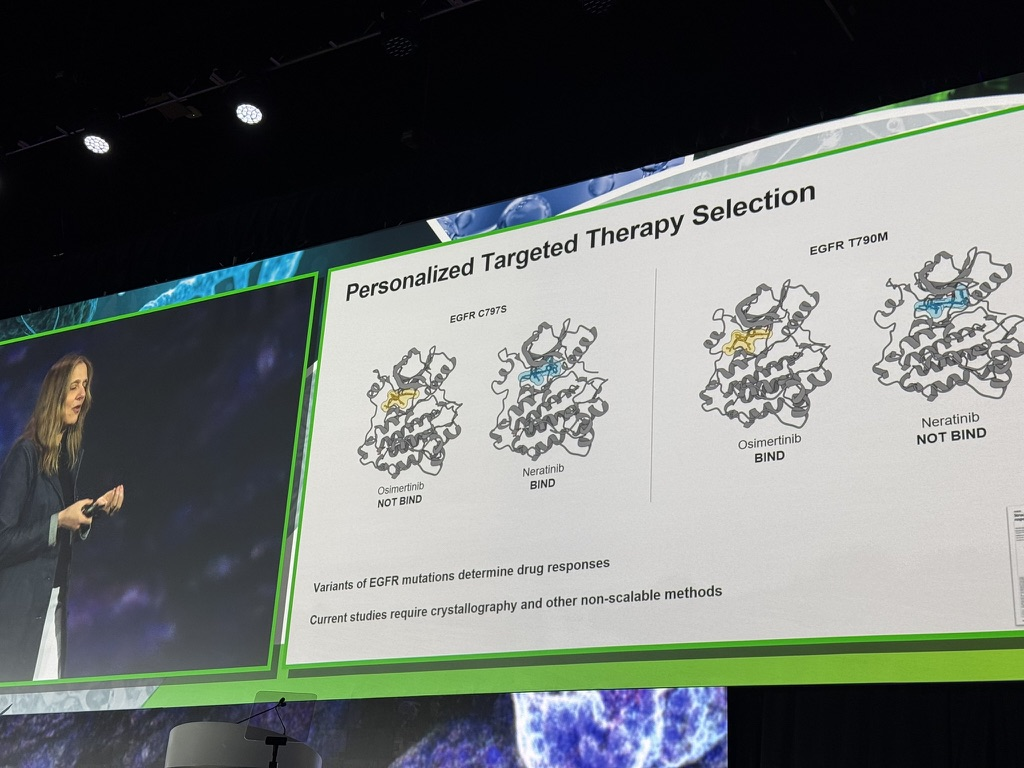
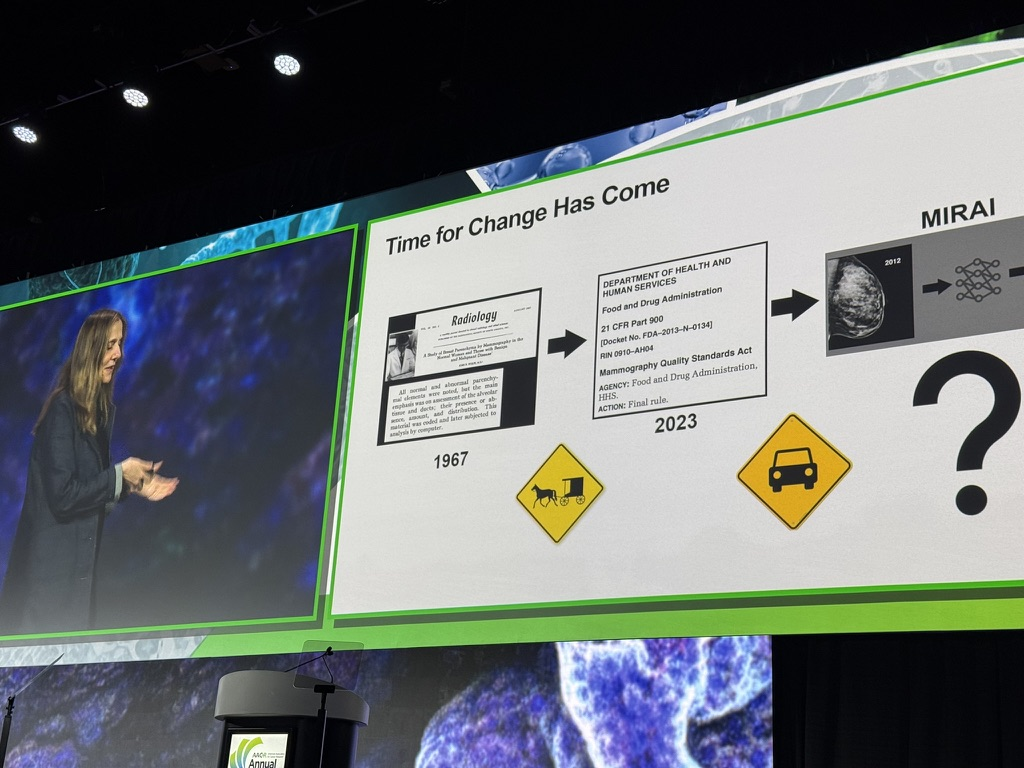
How can AI help us? The SPARC model: understanding the activity of molecular patterns from images and predicting risk. The Boltz model: personalized selection of targeted therapy by modeling the interaction between a drug molecule and a mutated target protein. The MIRAI model: AI-based recognition of mammography images and 5-year risk assessment.

News from the World of Large Biological Models

The session was chaired by Jakob Nikolas Kather, a rising star and professor of clinical AI at the University of Dresden, Germany.

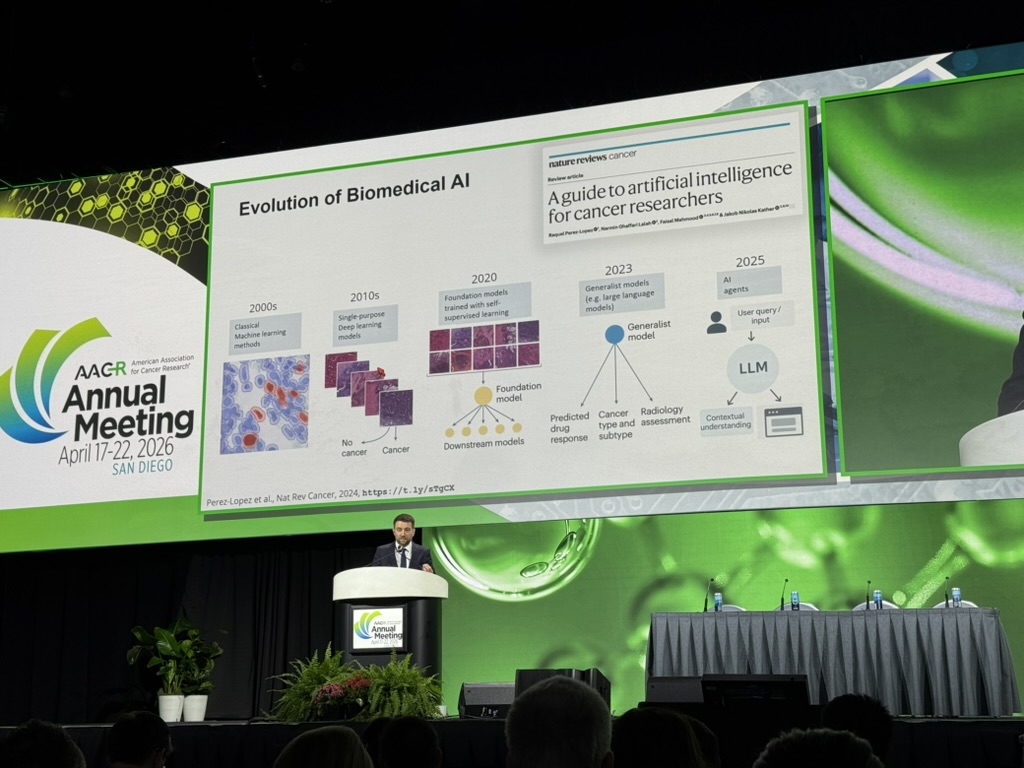
Jakob said that pathology foundation models are something from 2020. 2026 is the year of agents that work with databases of clinical records and answer doctors in human language.

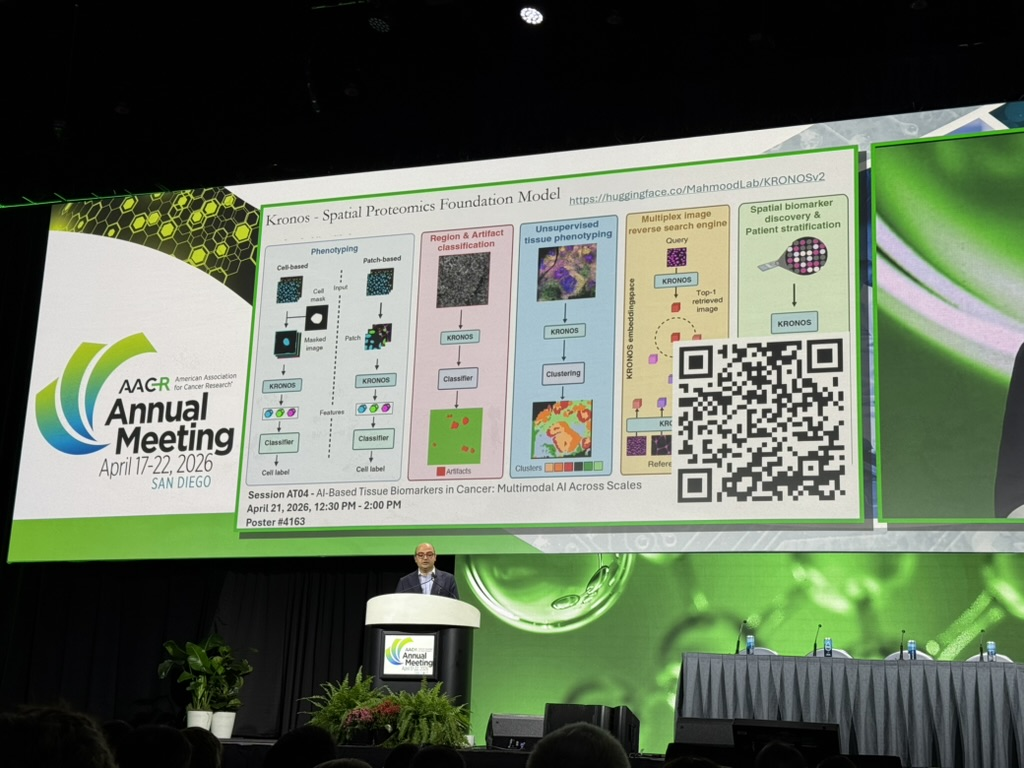
Faisal Mahmood, the father of AI in pathology, presented several new models from his lab.

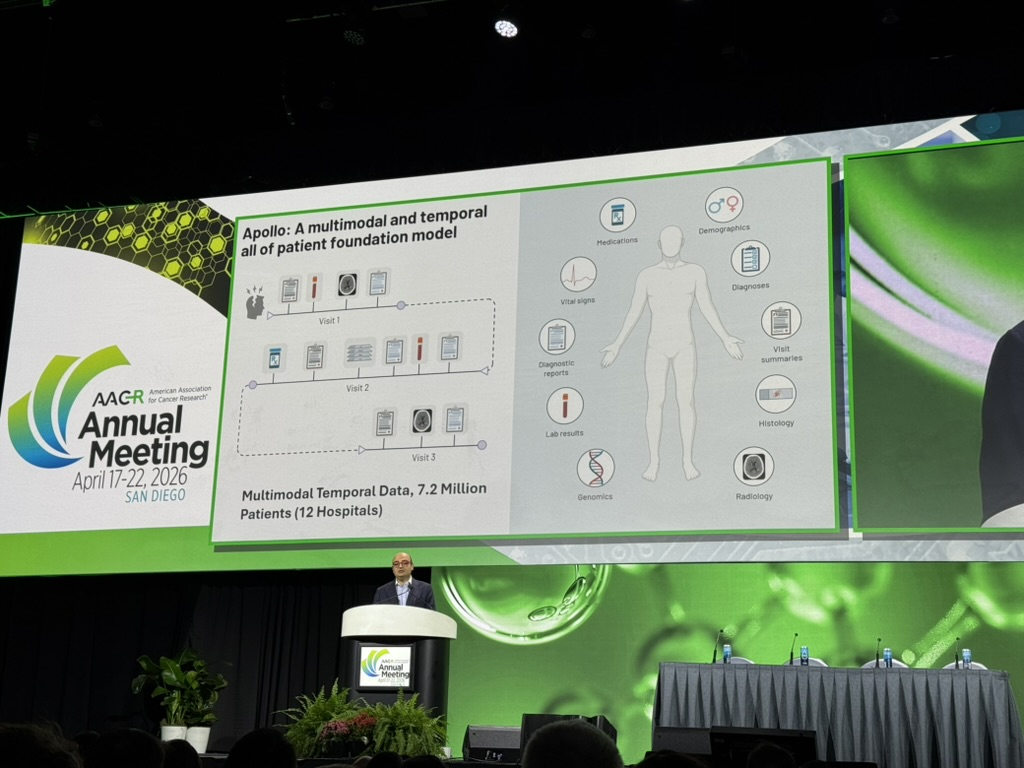
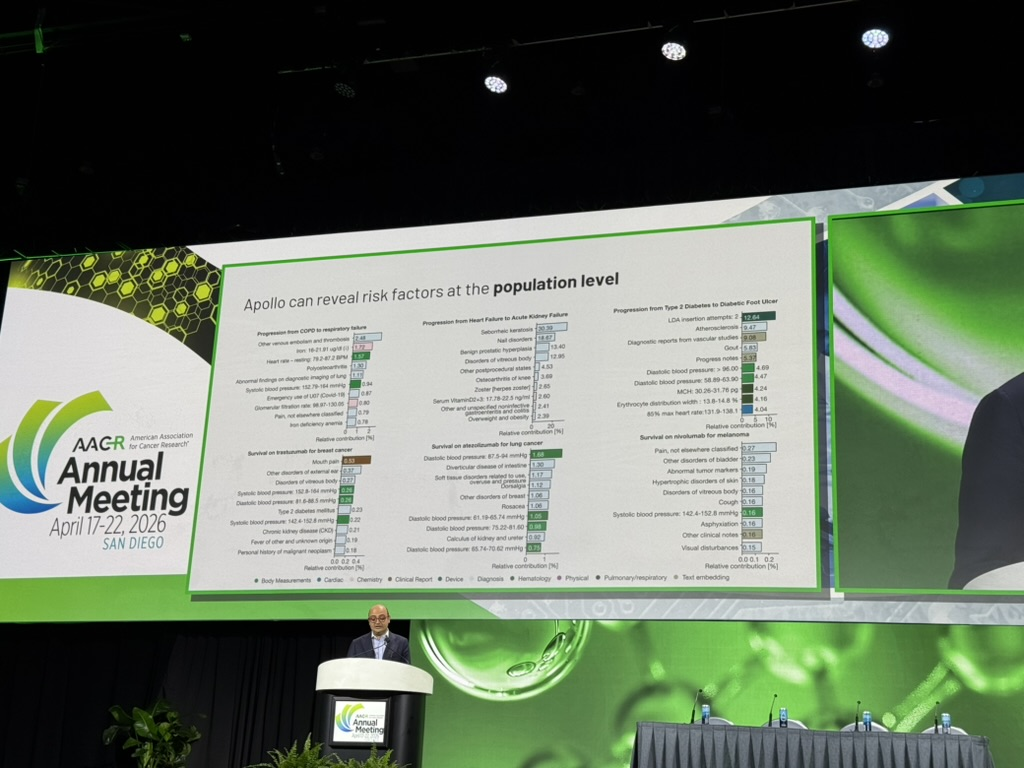
Faisal understood that it was time to move further and presented Apollo — a large foundation model whose main modalities are standard clinical records about the patient and results of routine laboratory and instrumental tests, such as blood tests and X-rays. The model can understand risk factors, predict disease progression, and predict treatment outcomes.
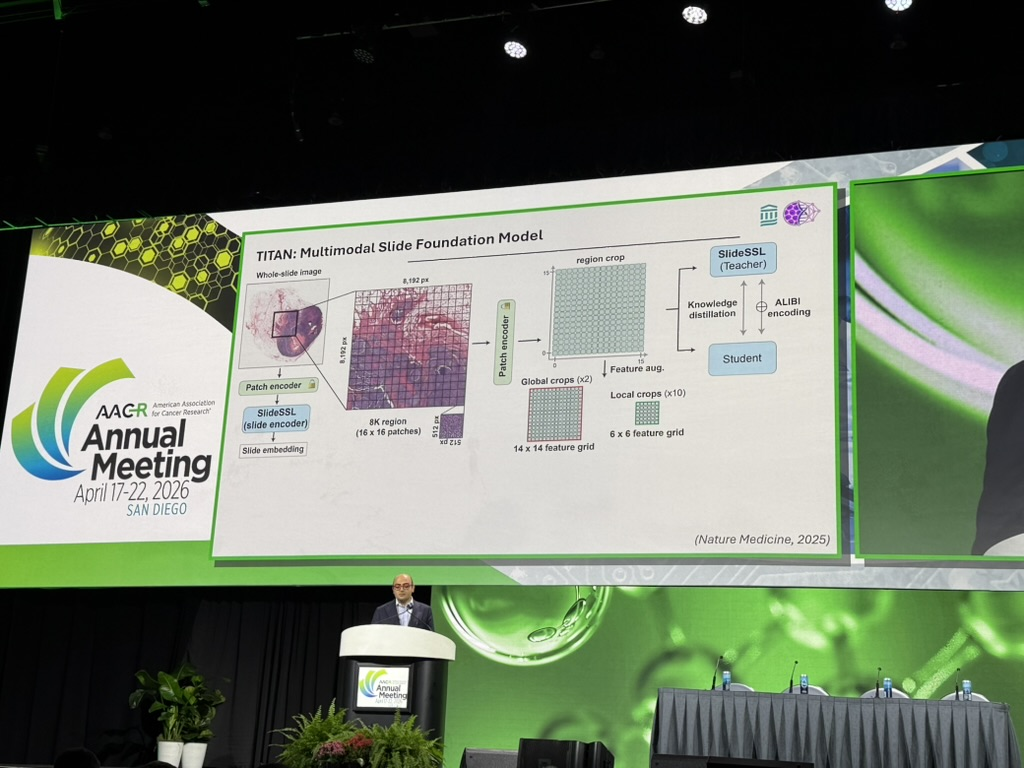
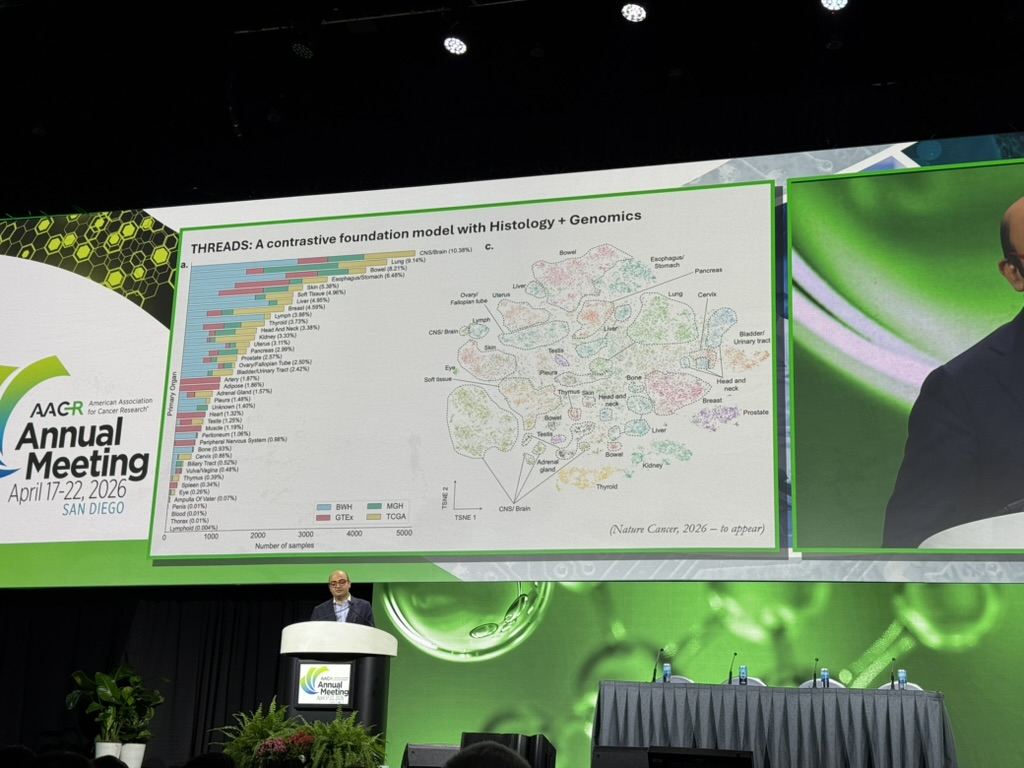
A new histology model, a new model for histology + transcriptomics, a new model for histology + genomics, and a new model for spatial transcriptomics.

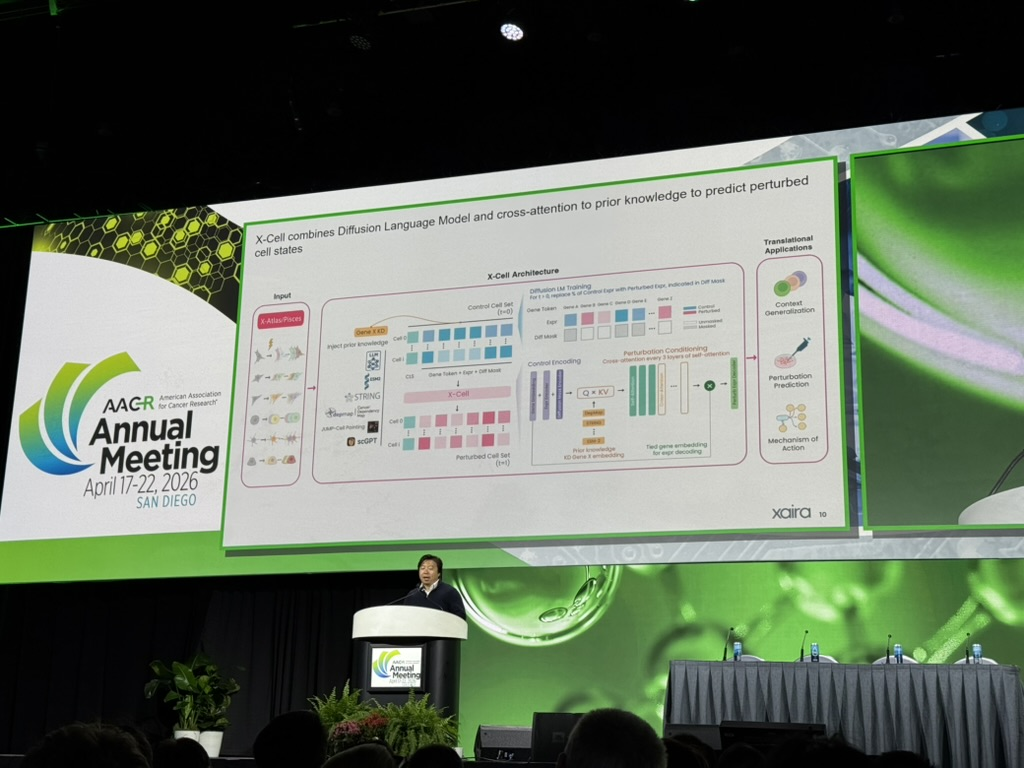
Bo Wang, the creator of scGPT, also presented two new models from his lab.

X-Cell: a new improved version of scGPT. BioReason: a model for predicting the function of proteins for which the amino acid sequence is already known, but no wet-lab experiment has been performed.

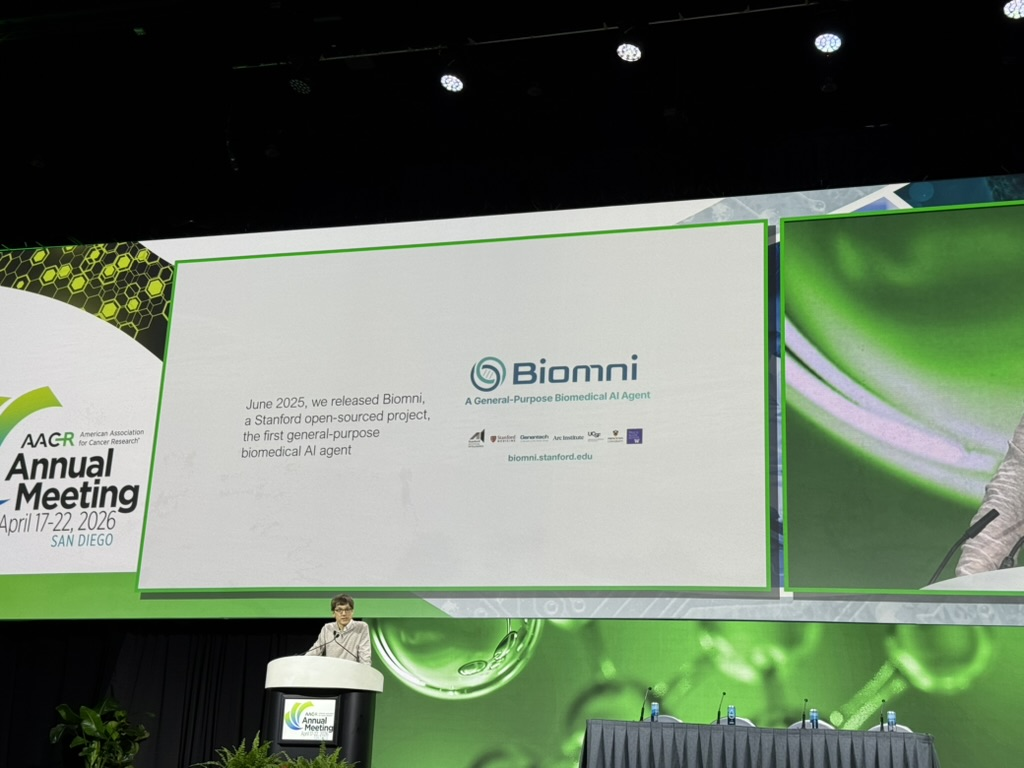
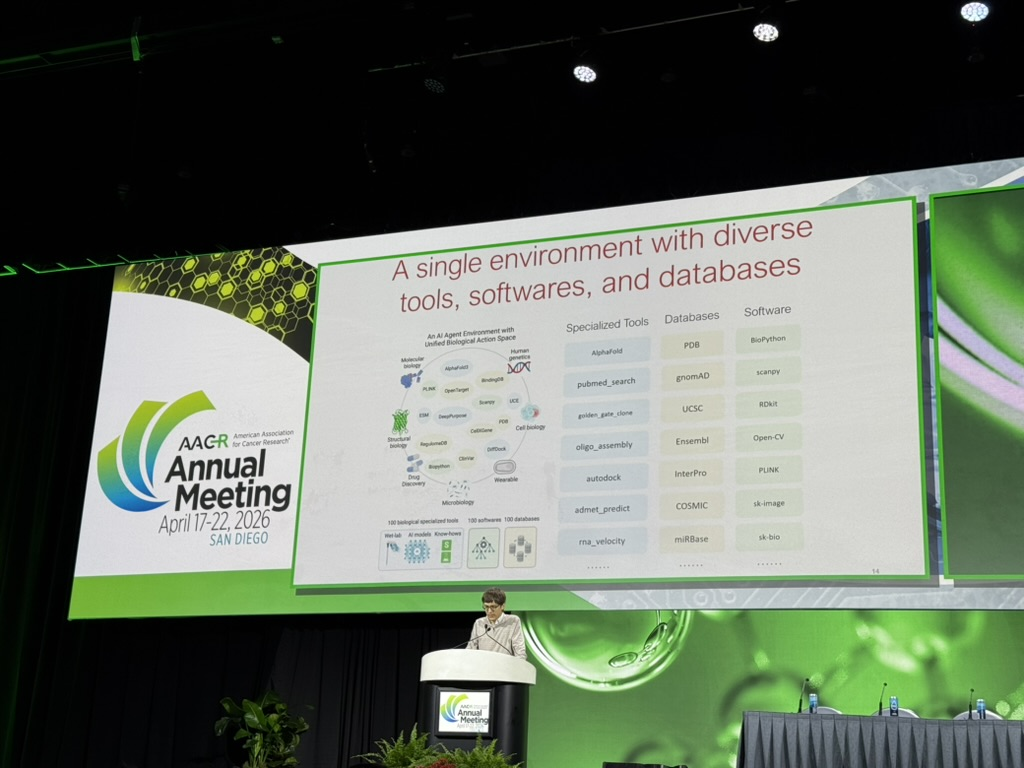
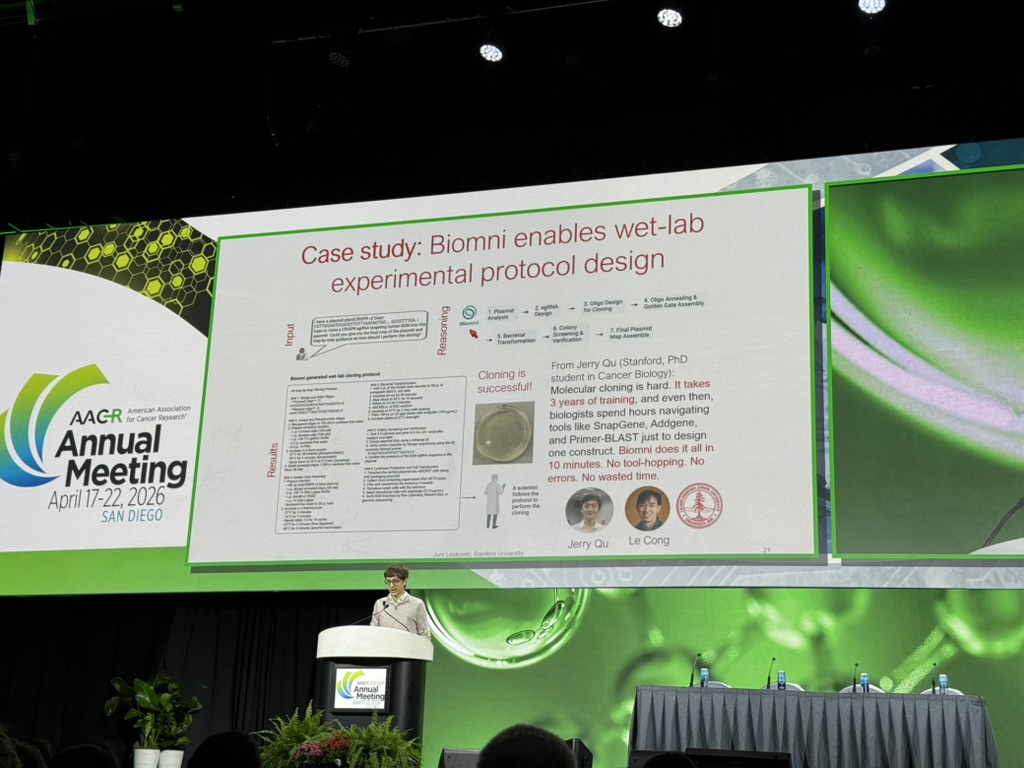
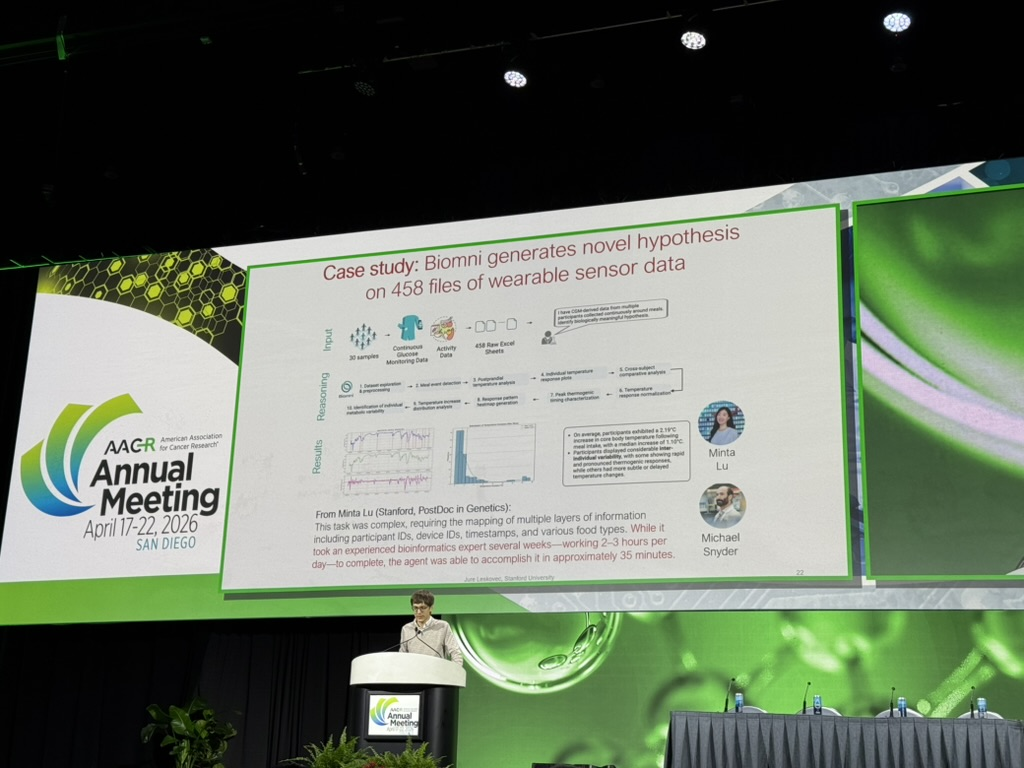
Jure Leskovec presented Biomni — an agentic system designed for multi-step work on biological questions. We should test it.

The agent can work directly with bioinformatics tools and search databases. Examples of use: 1. the agent designed a wet-lab protocol; 2. the agent went through 458 tables and files from a study and generated hypotheses that can then be tested.

Poster Session

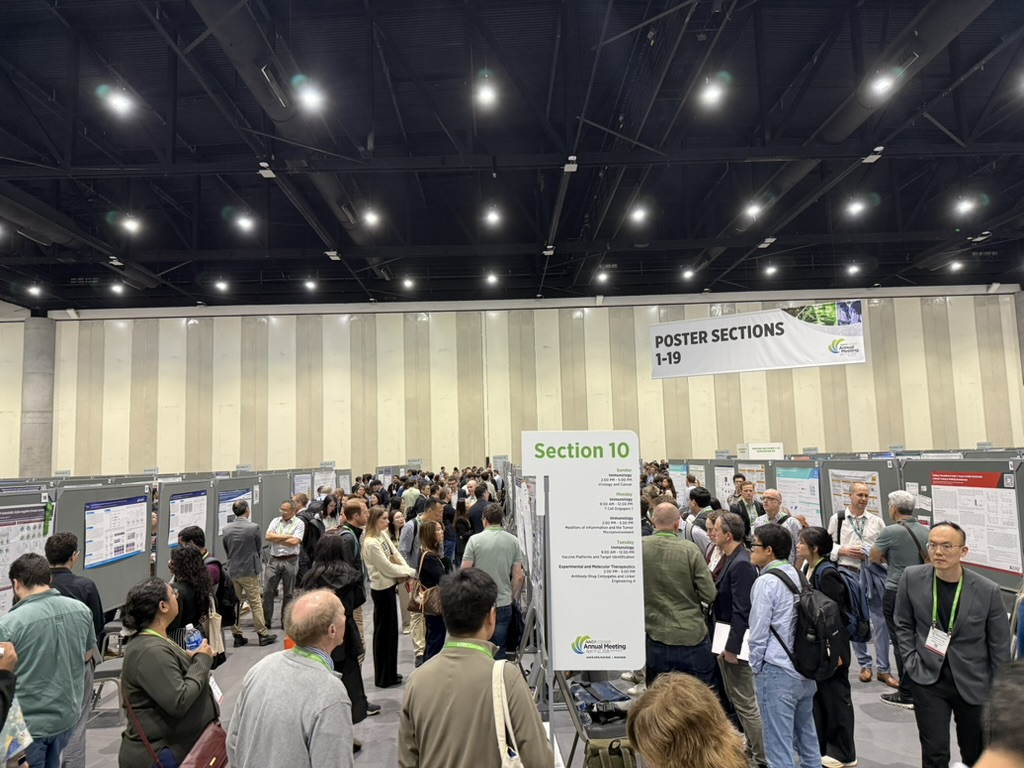
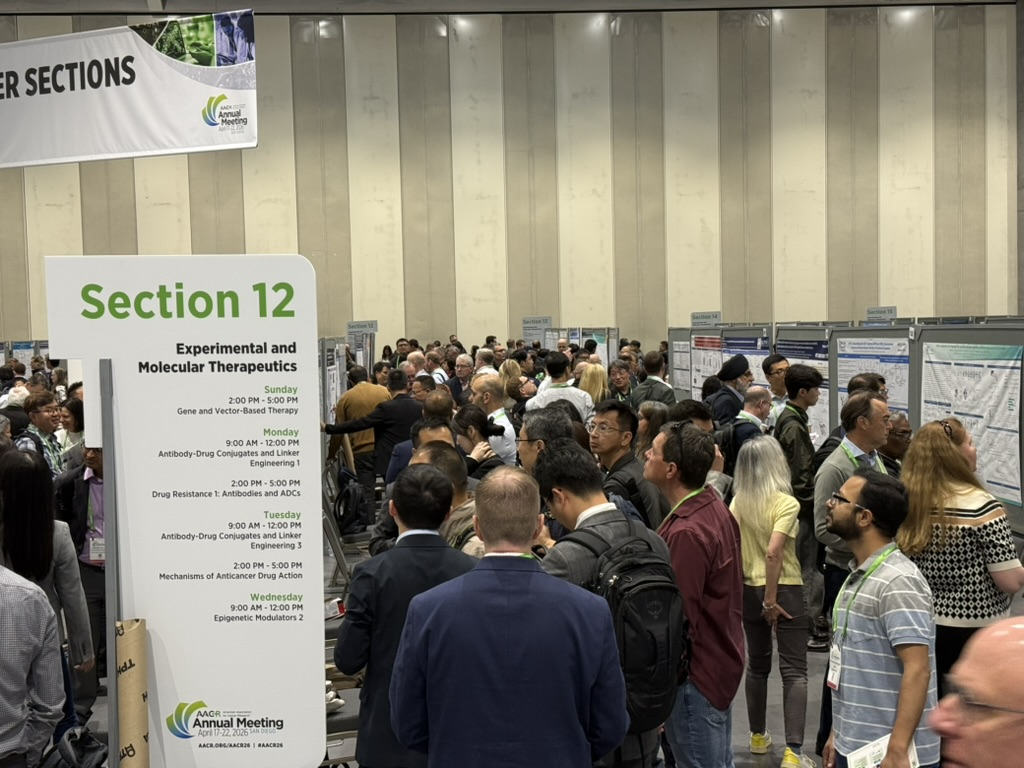
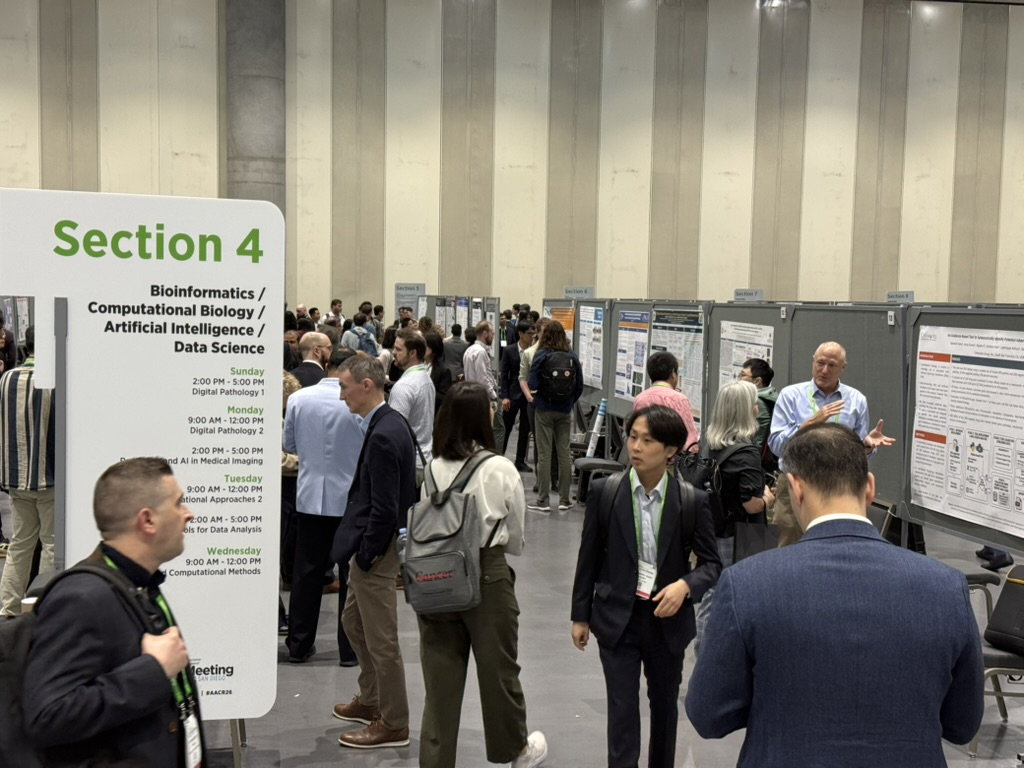
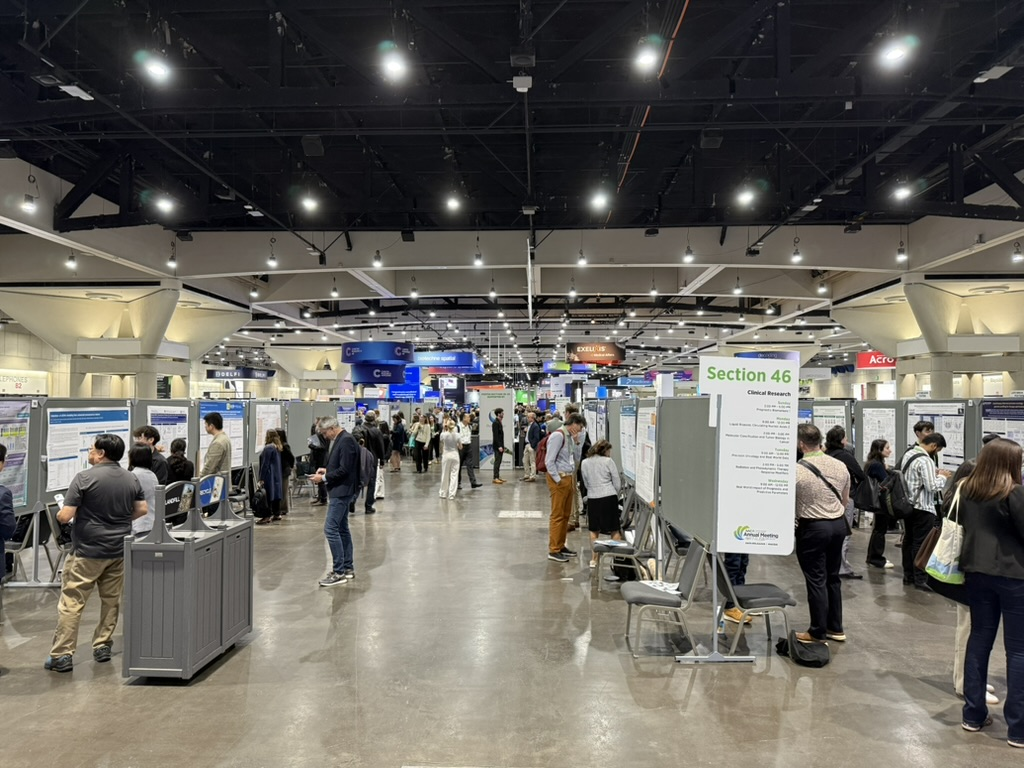
The following trend was visible at the poster sessions. The sections about new classes of therapies and first-in-human trials were extremely crowded. The AI sections had moderate interest. But the classical sections on clinical studies and bioinformatics were rather quiet.

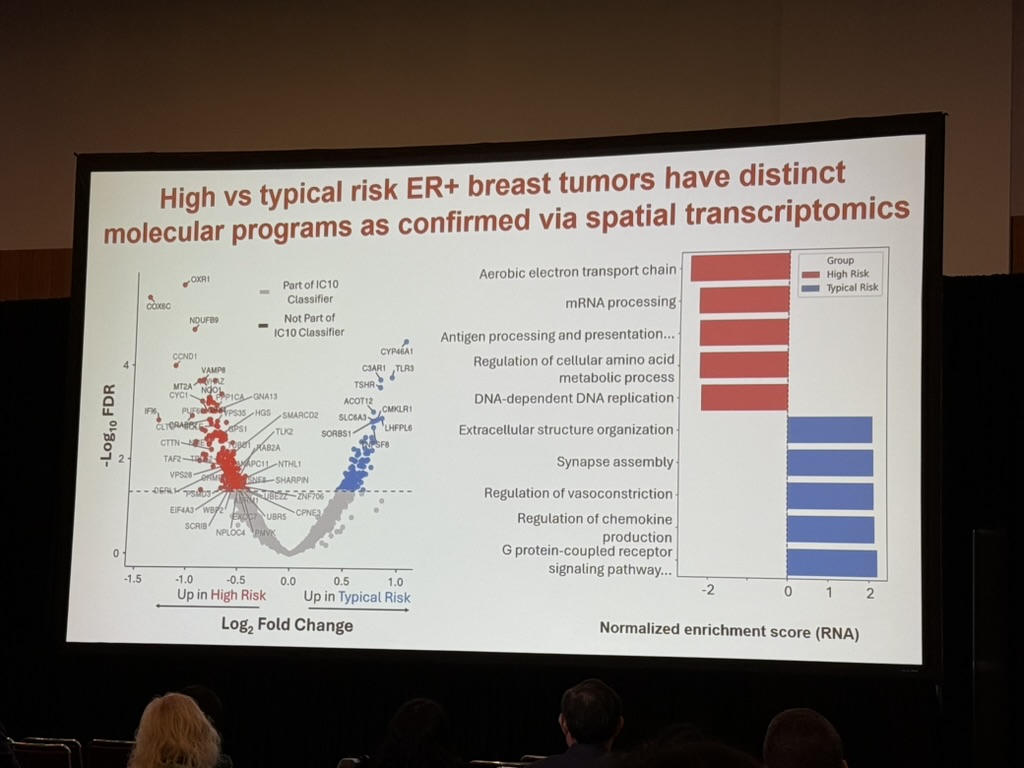
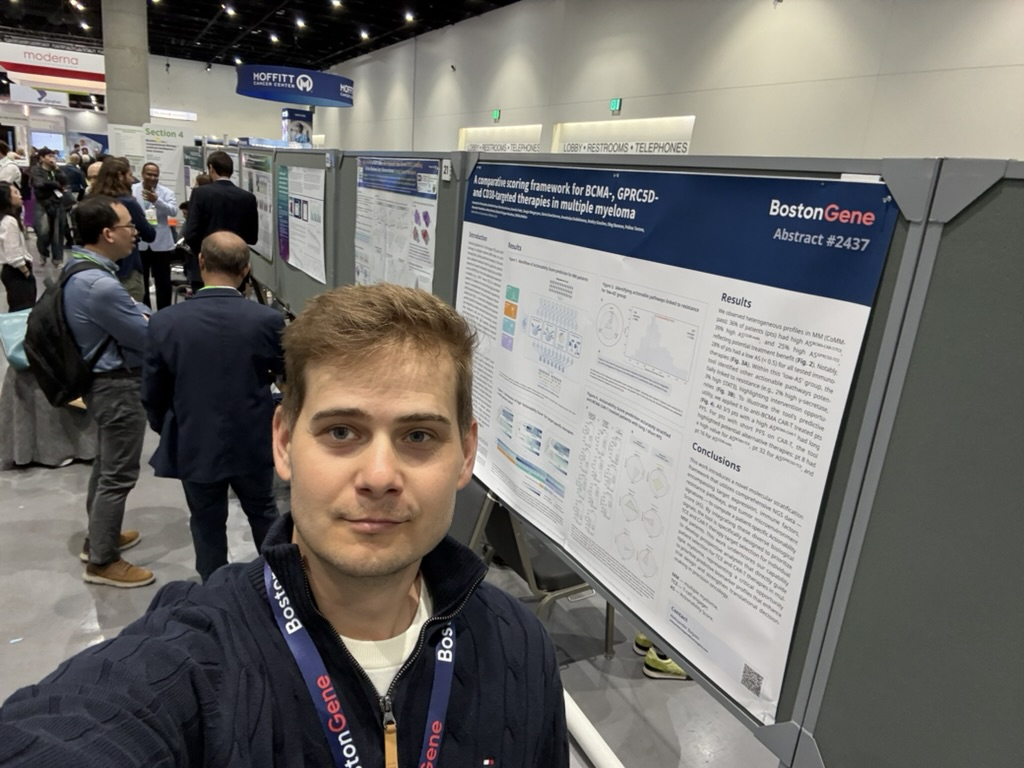
1, 2 — immunology and experimental therapy; 3 — AI section; 4 — clinical research: prognostic biomarkers, molecular cancer classifiers, population studies, liquid biopsy.

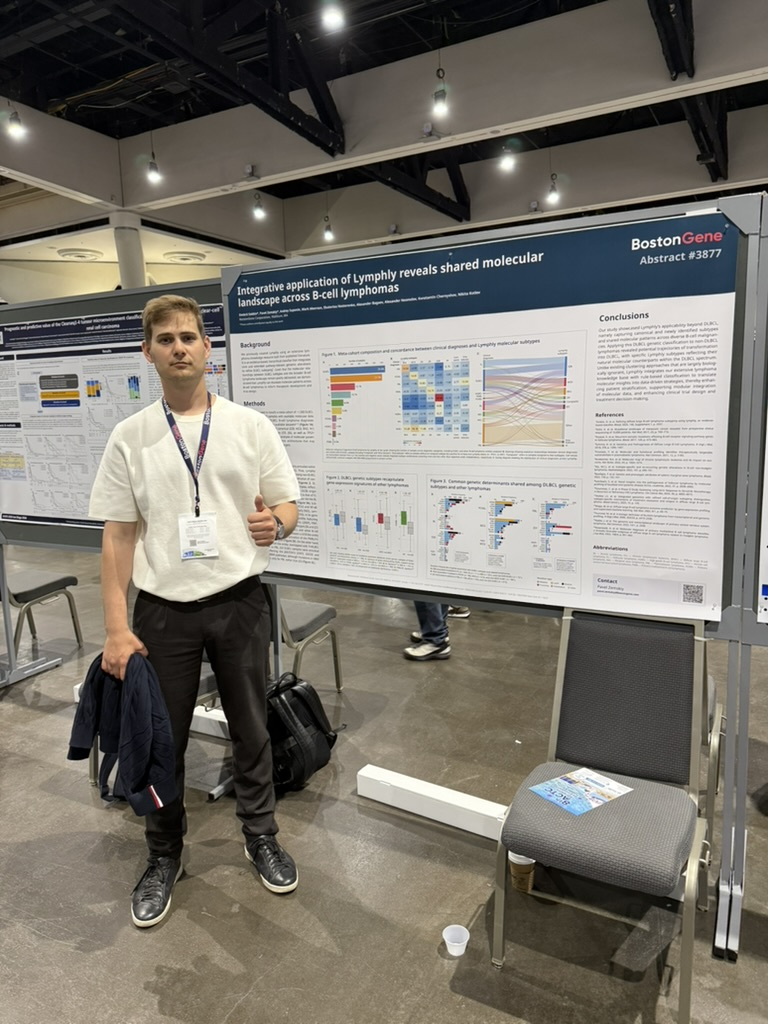
I presented two works. The first one was about identifying the right therapy for a patient with multiple myeloma. The second one was about shared genetic patterns between diffuse large B-cell lymphoma and lymphomas of other histologies.

The main conclusion is that we can work on this area where AI meets the trend of advancing new types of therapies.