AACR 2026. The next step for foundation models toward real-world products
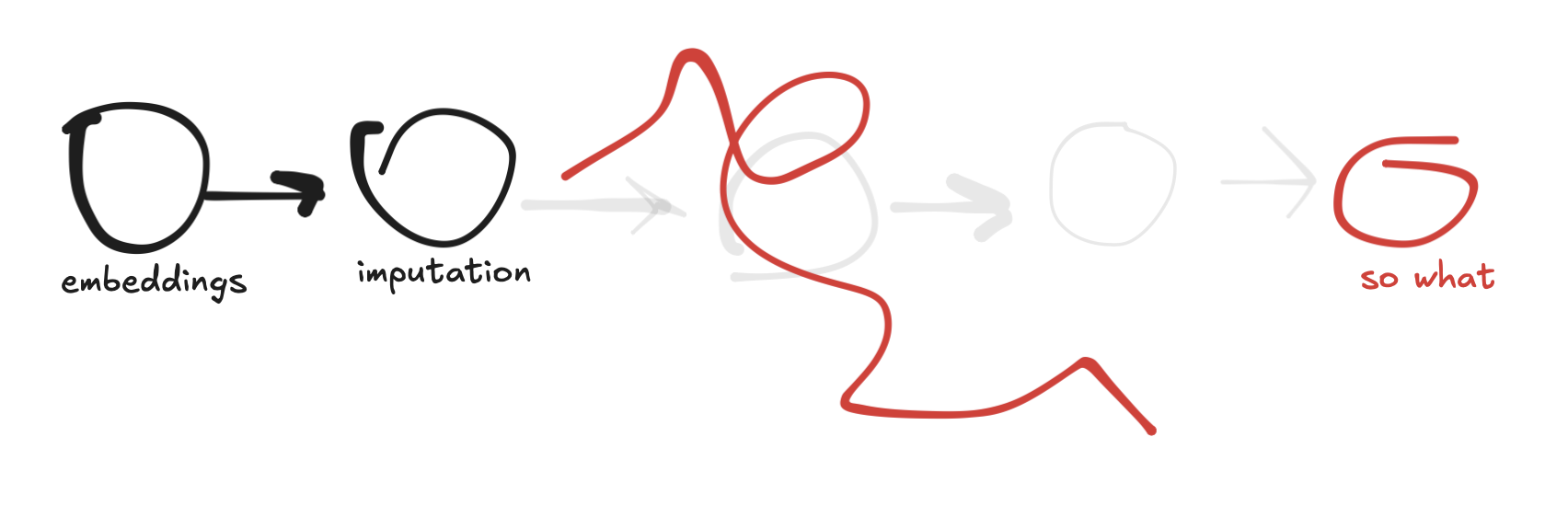
In the world of large models, generating embeddings and imputing data are only early steps. The final product-level steps, such as response prediction, are much more difficult. The hard part is to understand and implement the intermediate steps between imputation and an actual real-world product.
I gathered some thoughts from the AACR 2026 and formulated like this:
How to use embeddings and imputation → to get one step closer to a product.
Synthetic histology slides → against class imbalance
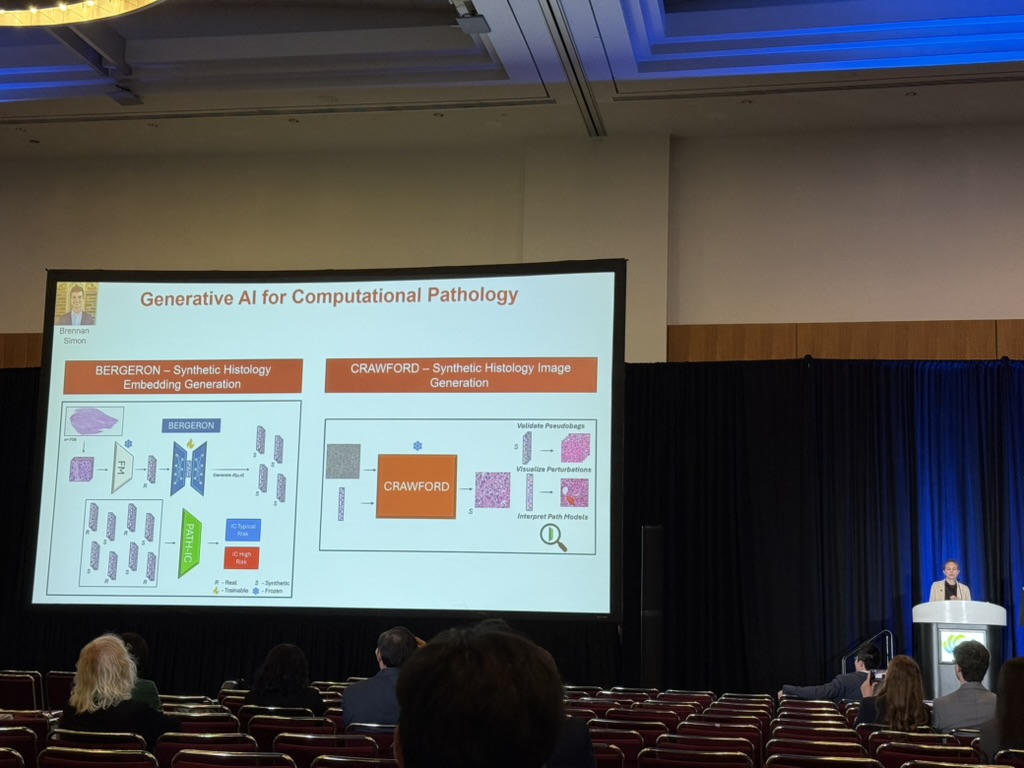
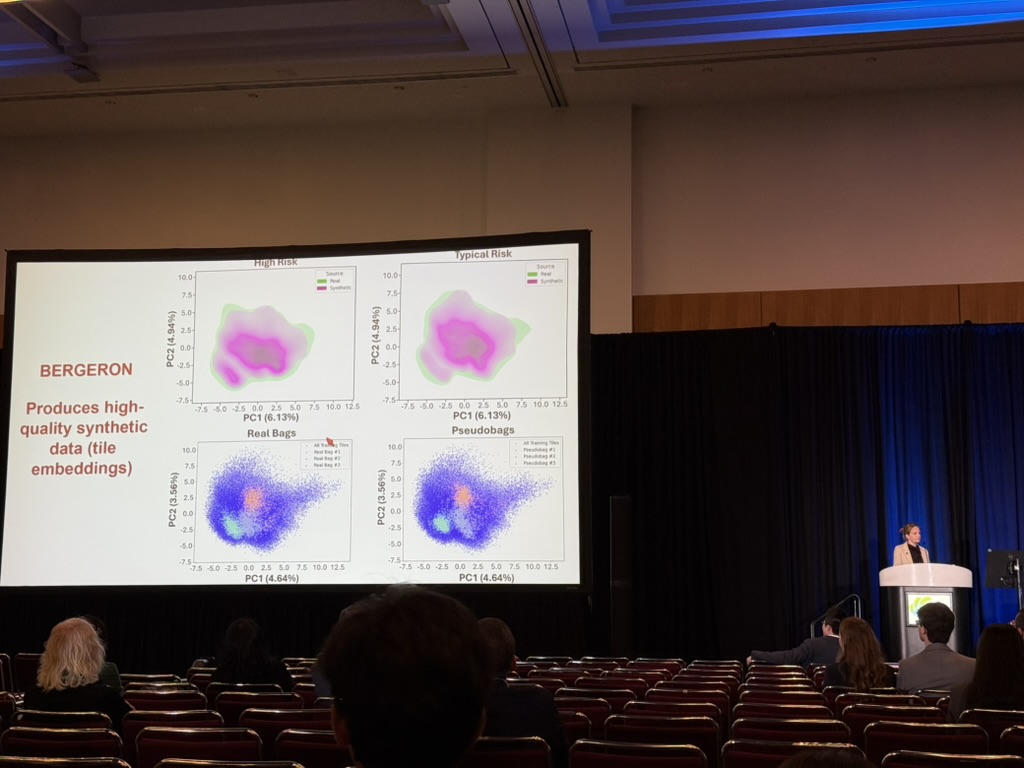
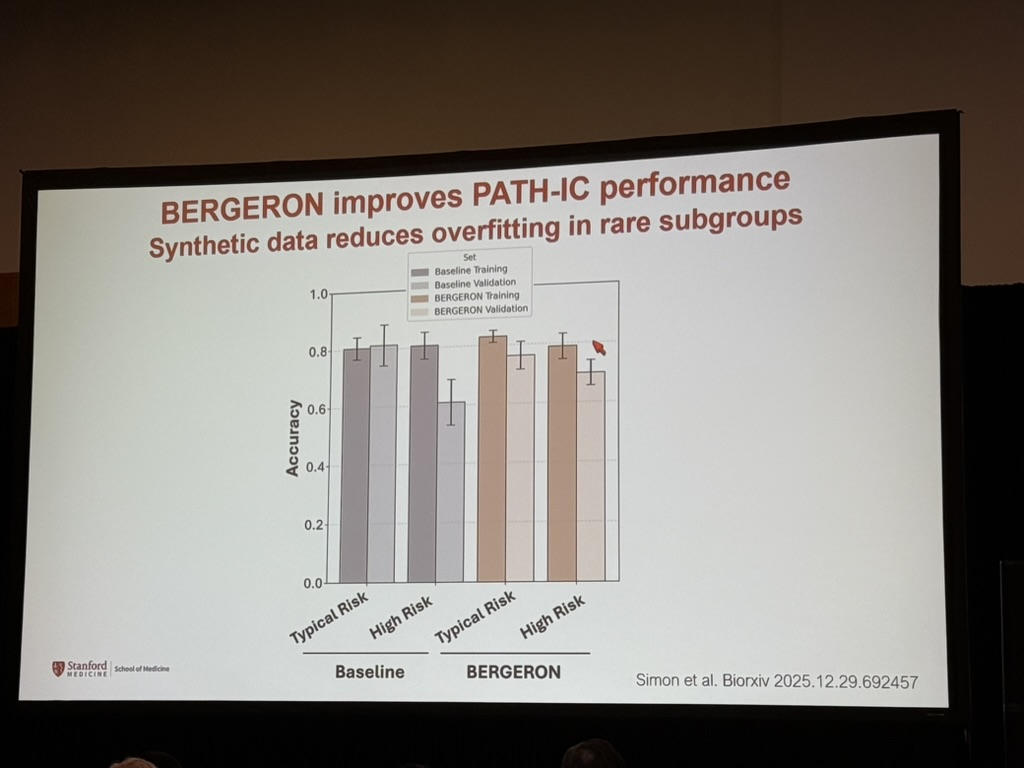
One interesting application of synthetic histology slides is generating slides for rare disease subtypes to overcome class imbalance. The problem is that a rare subtype is… rare. And when training a model, there are not enough samples of the rare subtype for the model to learn it well.
The proposed approach is to generate histology slides of the rare subtype at the dataset preparation stage. In fact, synthetic embeddings of the rare subtype are enough, even without visualization. After adding this extra set of synthetic samples, the main model learns the rare subtype better and predicts it with higher quality.
The paper about the BERGERON and CRAWFORD models from Stanford.
Attention analysis → for finding contextual, model-derived hypotheses
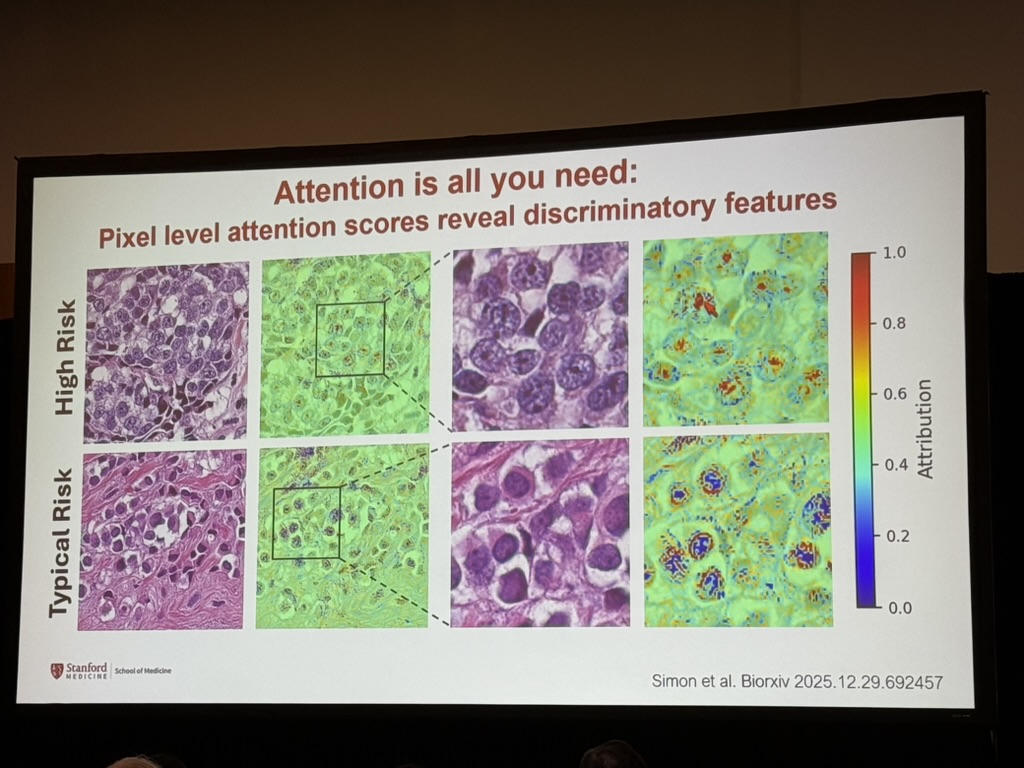
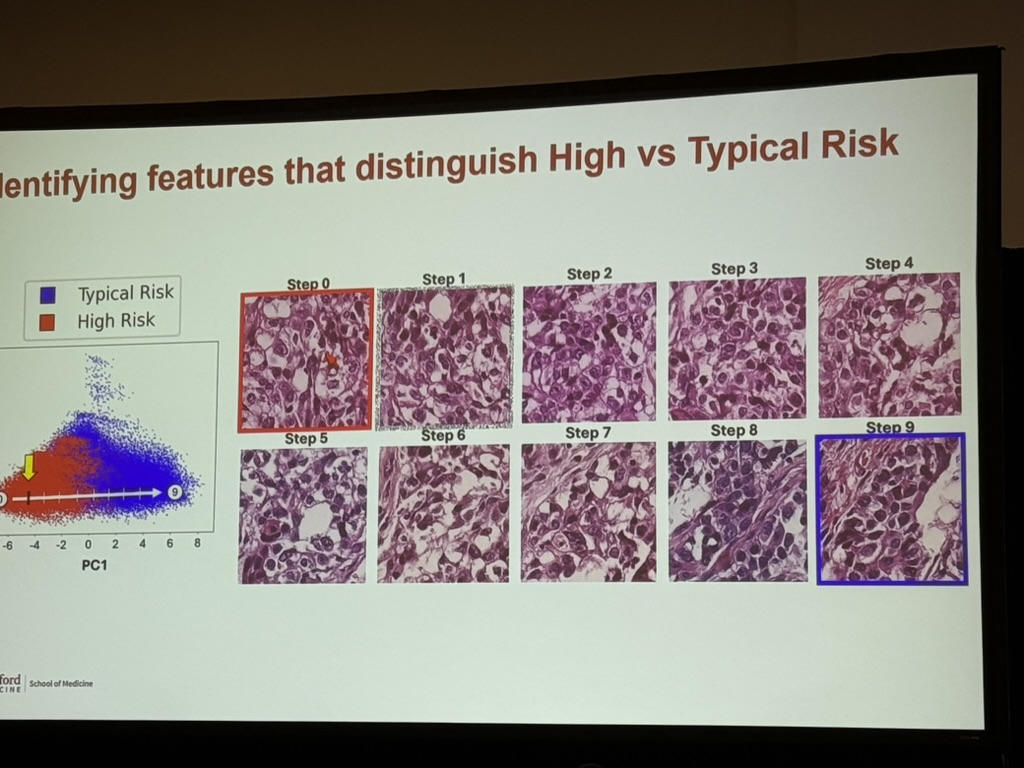
Model attention analysis is the calculation of features that the model relies on more strongly than others when making a decision.
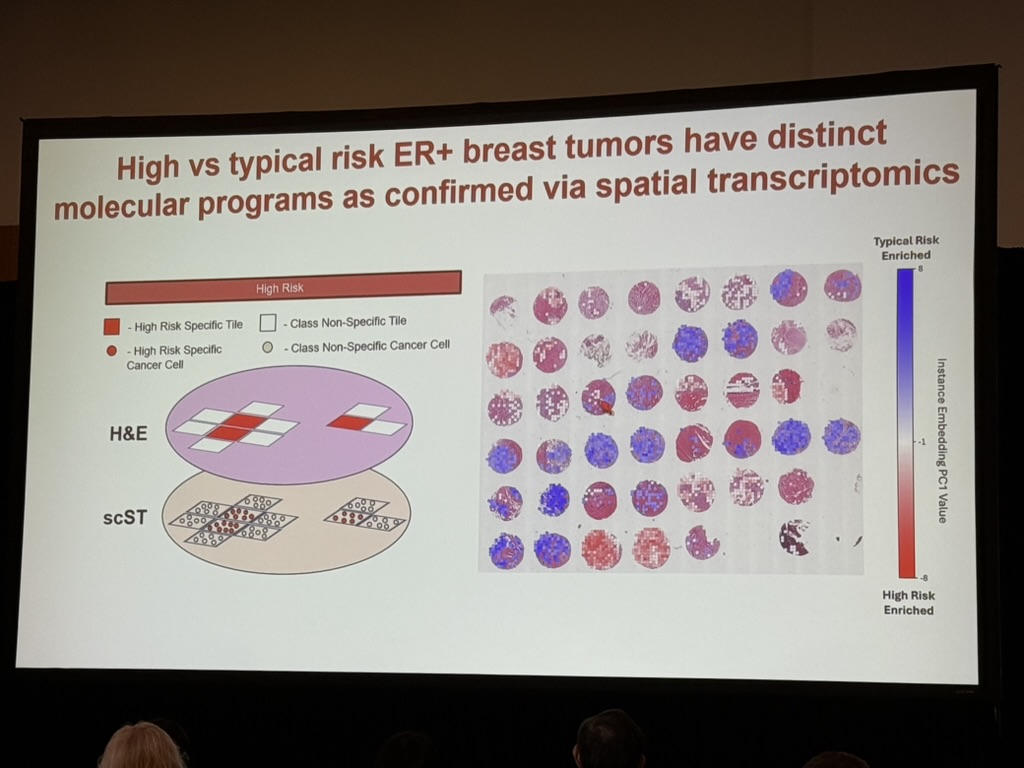
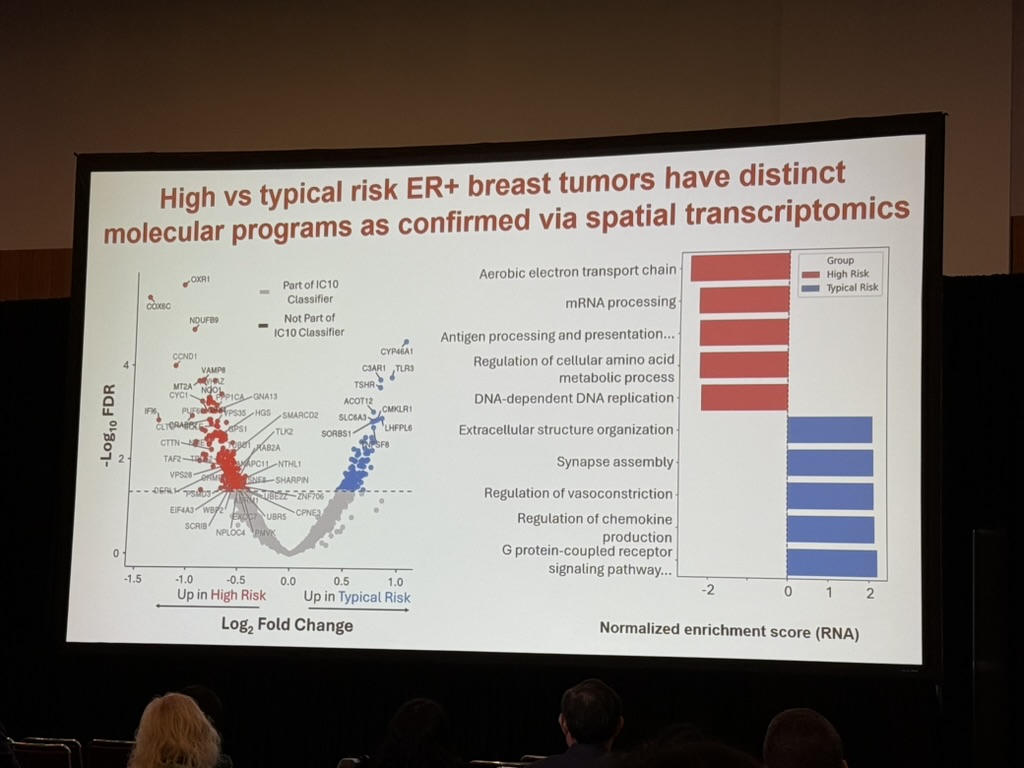
At the level of a single slide, we can ask: what exactly did the model see in this region that is not present elsewhere? At the cohort level: how do low-risk slides differ from high-risk slides? How do malignant regions on slides differ from normal regions? In other words, we compare not one whole slide against another whole slide, but the most interesting regions specifically.
Benchmarking pressure → for directed model development
Every serious talk about new models included the claim: “our model performs better than other methods on benchmarks, look.” Without this validation, the rest of the talk was no longer perceived as convincing.
But it was even more interesting when teams drew a concrete conclusion from this and took the next step, using benchmark insights to improve the model.
Multimodality → works better than a single modality
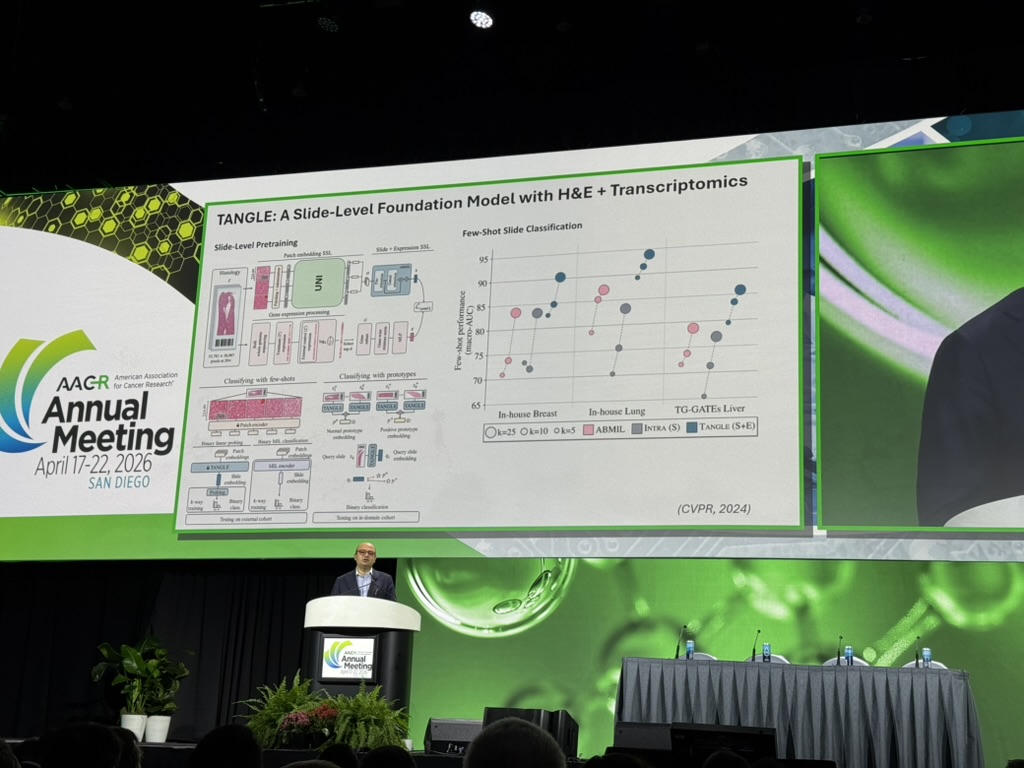
Faisal Mahmood, the father of all AI for pathology, shows in the TANGLE paper that if a model is trained on both histology and transcriptomics, the results are better than with histology alone.
More data → the model works better
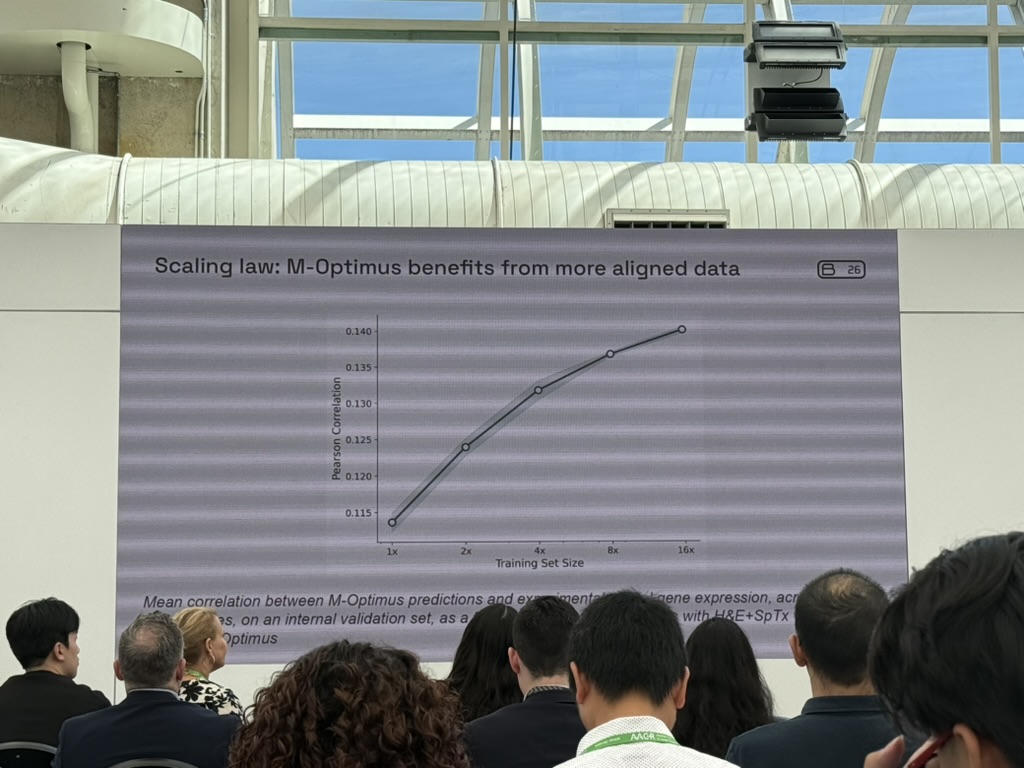
Bioptimus, a French company and creator of commercial AI models, released the M-optimus model and showed that as the training set increases, model performance also improves, and the plateau has not yet been reached. Although I was not impressed by the result: when the training set increased from 8× to 16×, the correlation of imputed spatial expression increased from 0.136 to 0.140? What even is that, lol.
Text descriptions of slides → for better quality with a smaller training set
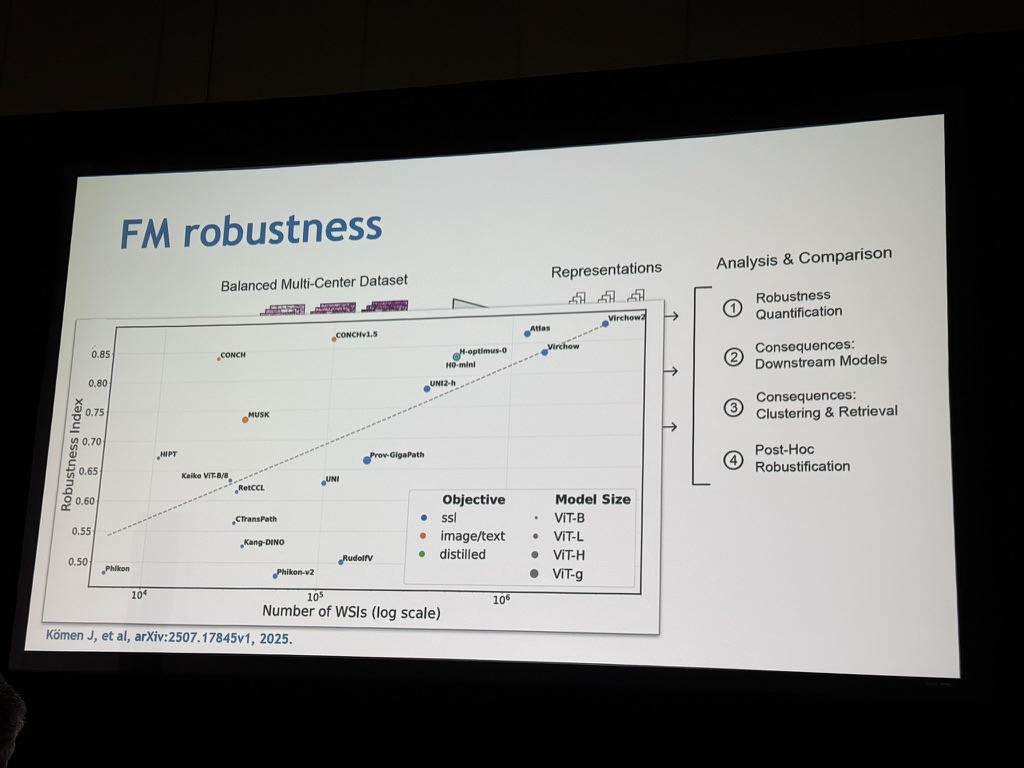
Yana Lipkova gave a review of benchmark reviews for pathology models.
It was interesting that the CONCH model shows performance comparable to top models while using a training set that is an order of magnitude smaller. This was achieved because CONCH was trained on slides with text descriptions, unlike most modern models, which are trained only on images.
Working with context and autoregression → for better protein function prediction
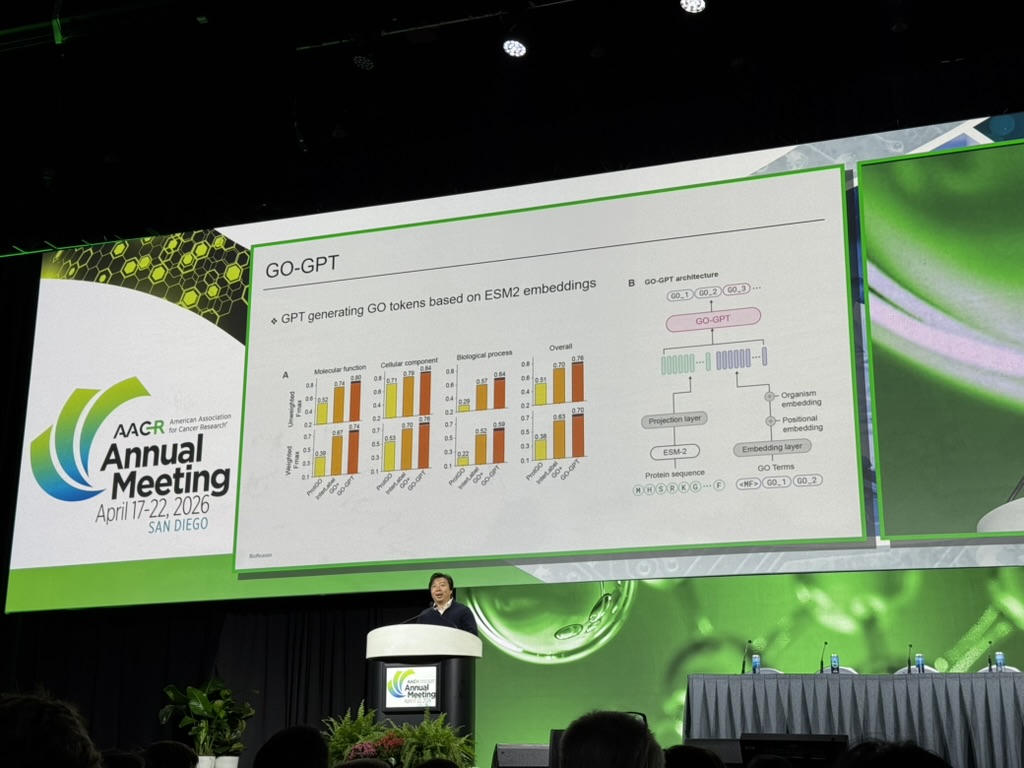
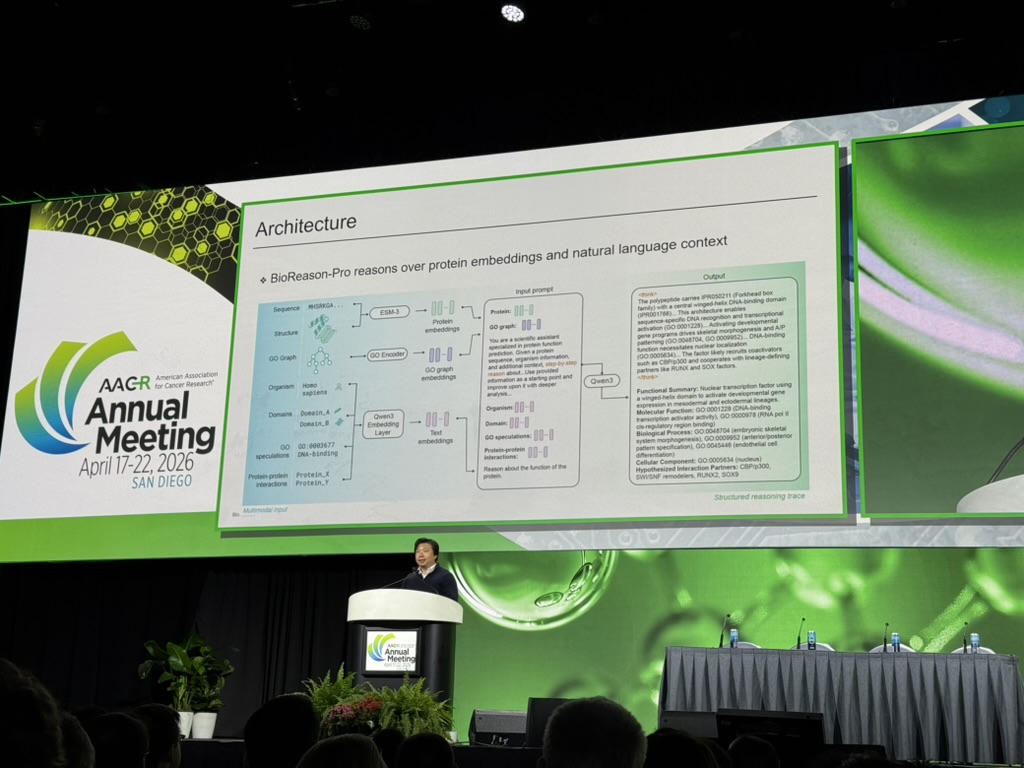
The author of scGPT, Bo Wang, presented the BioReason-Pro work. This is a pipeline that helps describe the function of a protein when its sequence is known, but no wet-lab experiment has been performed yet. The first stage of this pipeline is GO-GPT, a model that generates preliminary hypotheses about protein functions based on the protein sequence.
GO-GPT is an example of directed model development: benchmarks and experience from CAFA-like evaluations showed that flat prediction of Gene Ontology labels is not enough. The authors took the next step: they turned GO annotation into a task of sequential term generation — in other words, they added autoregression so that the architecture itself better matches the structure of Gene Ontology.