Microenvironment of Urothelial Cancer
Context
Bladder cancer is quite common and for some reason it responds poorly to immuno-oncology drugs, although in many cancers such therapy is already the standard. Perhaps we don’t yet know something about the immune microenvironment of this cancer.
Goal
To study the tumor microenvironment of bladder cancer.
From the literature I learn that researchers are obsessed with the properties of malignant cells and have generated as many as 13 classifications. They all say there are Luminal and Basal subtypes, something in between, and sometimes they single out a special Neuroendocrine subtype. Meanwhile, the microenvironment has been studied in only two papers.
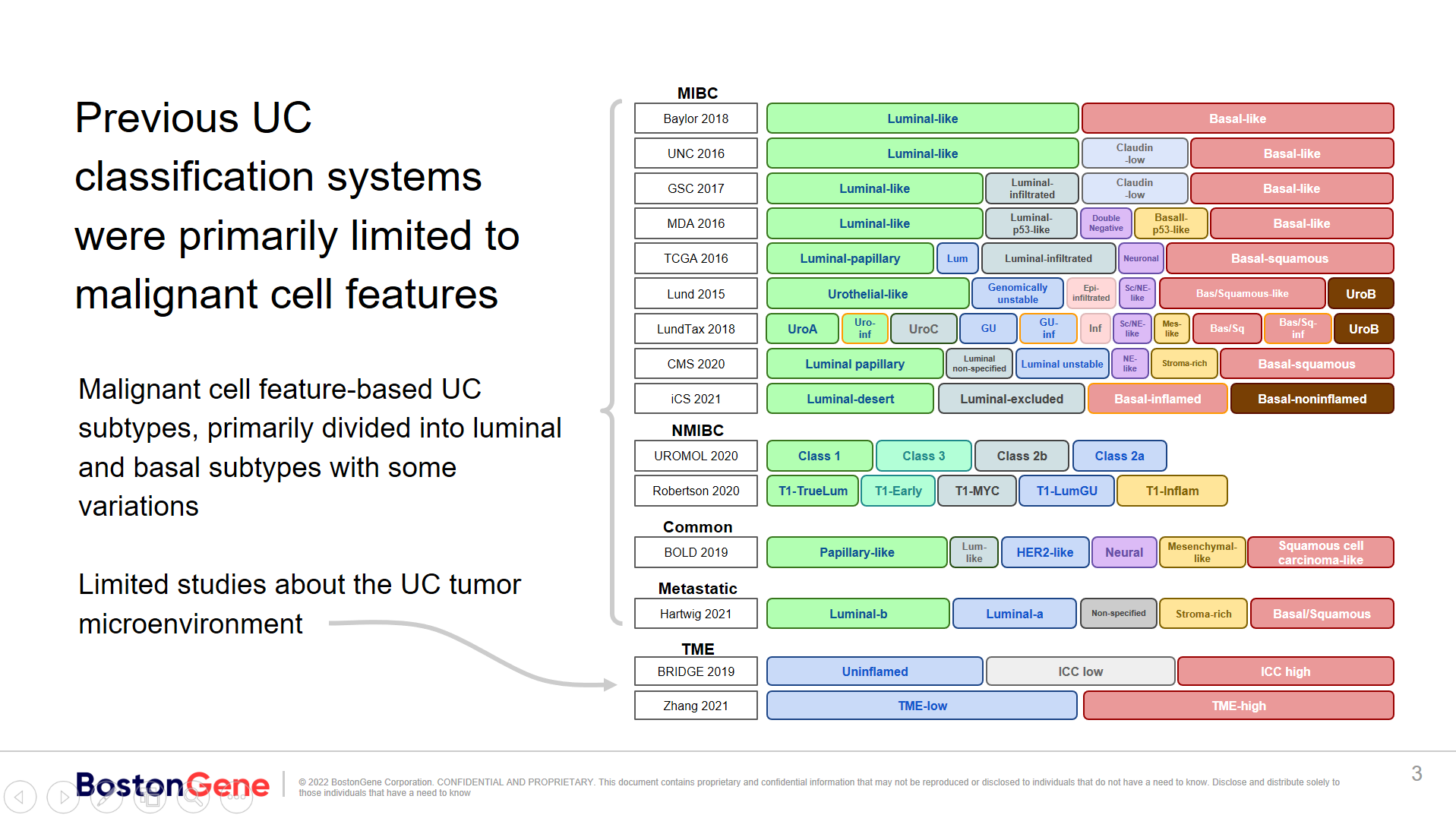
I combined all of the classifications. Subtypes with similar biological properties I highlighted by placement and color.
On the other hand, there is a good way to study the microenvironment developed at BostonGene.
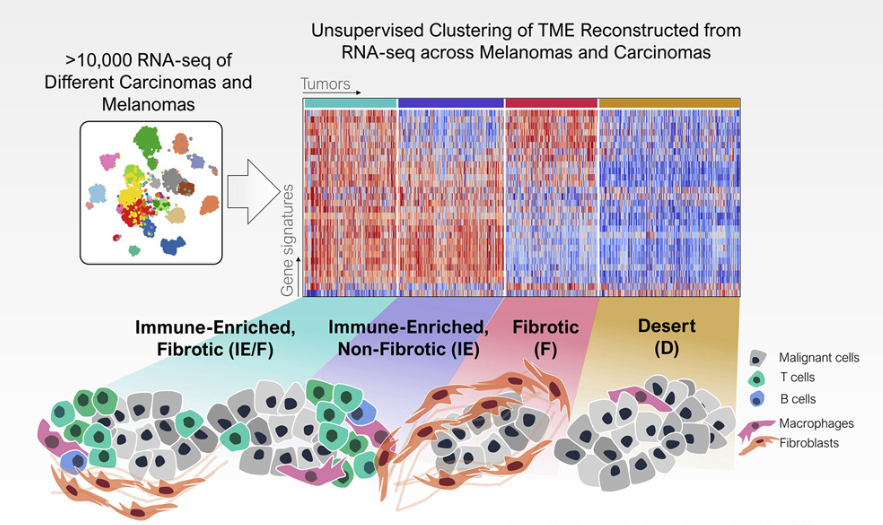
Cancers have four main types of tumor microenvironment; the Immune type survives best.
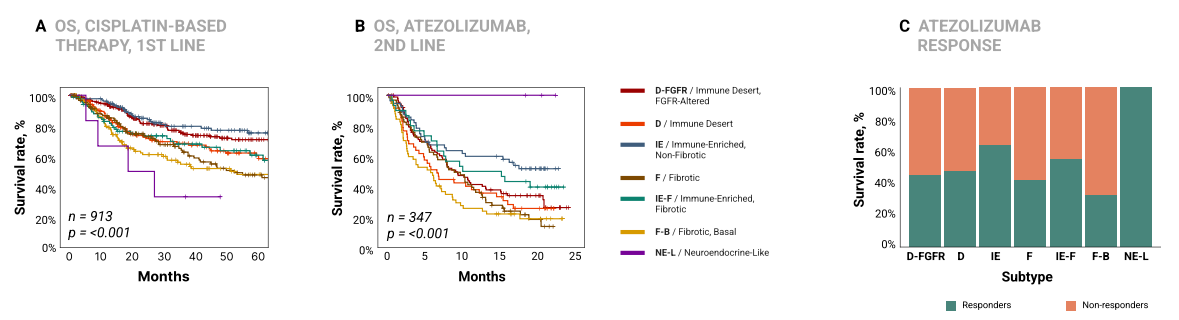
I decided to combine the approaches and take into account both the tumor microenvironment and the properties of malignant cells. I experimented with publicly available data. I ended up with seven subtypes. The subtypes correlate with clinicopathological properties such as survival, responses to immunotherapy, metastases and histological subtype.
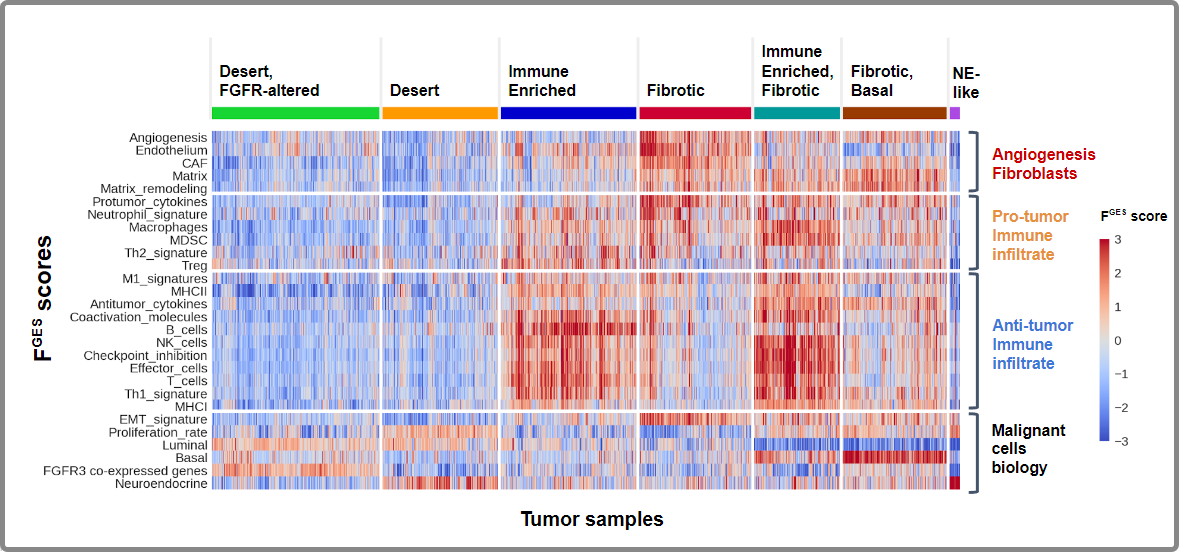
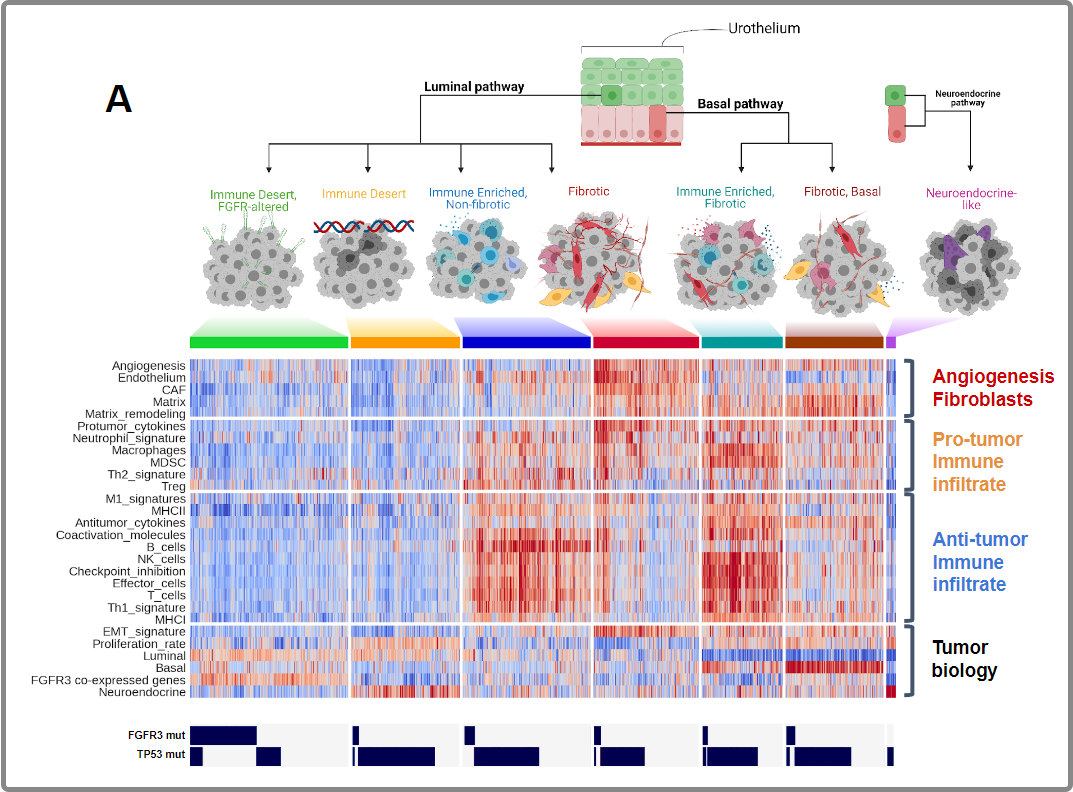
A heatmap showing the activity level of microenvironmental processes and cancer cell processes. Red means high activity. Patients are arranged horizontally, processes vertically. The heatmap is divided horizontally into seven subtypes and vertically into four semantic blocks.
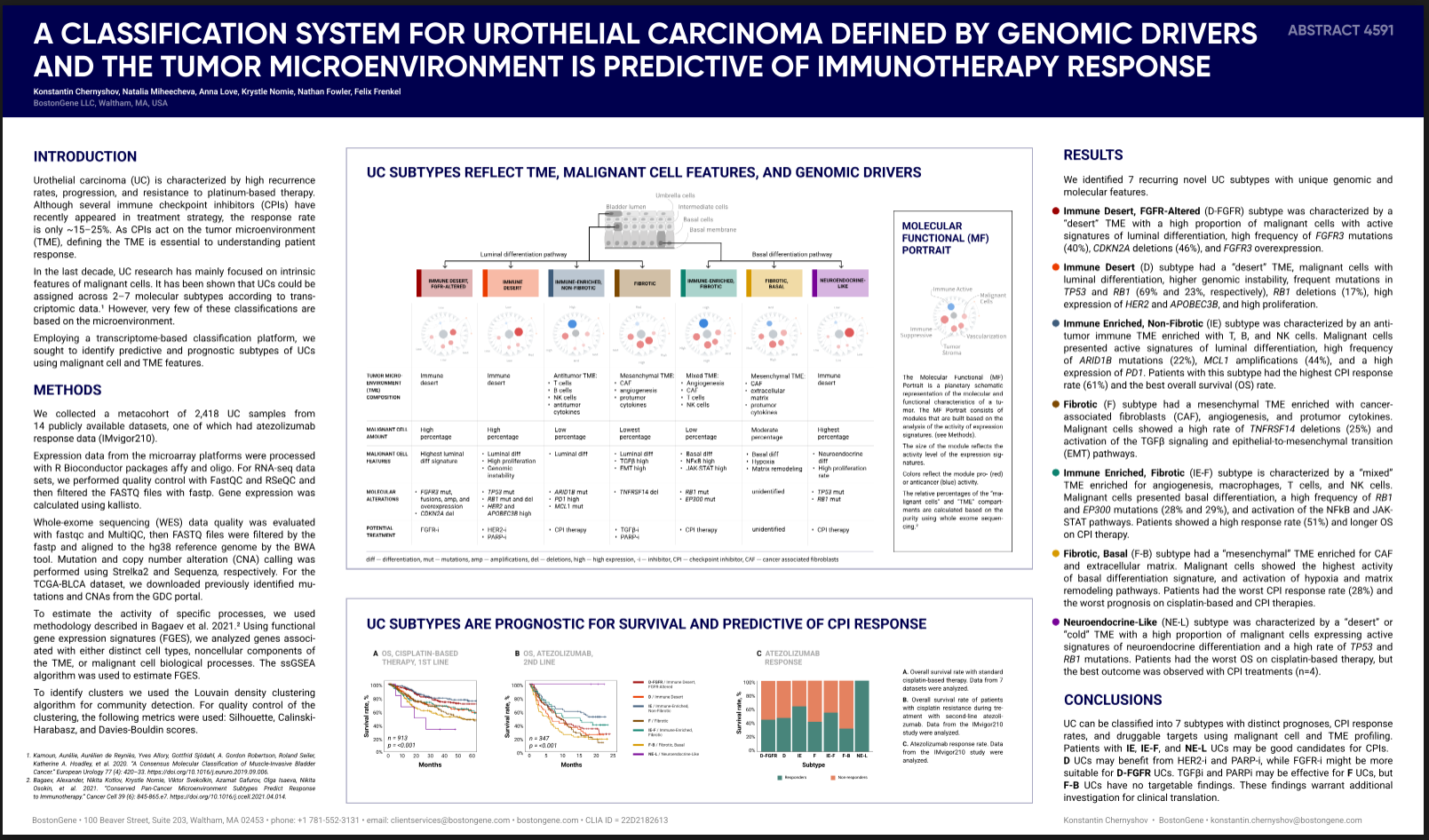
It worked out well and we submitted an abstract to ASCO 2022. The abstract was accepted and by May I had to draw a poster. This is a clinical conference, so the monstrous heatmaps need to be simplified.
- I drew it as a cartoon, sorted by luminal-basal activity; the visualization helped to understand some patterns
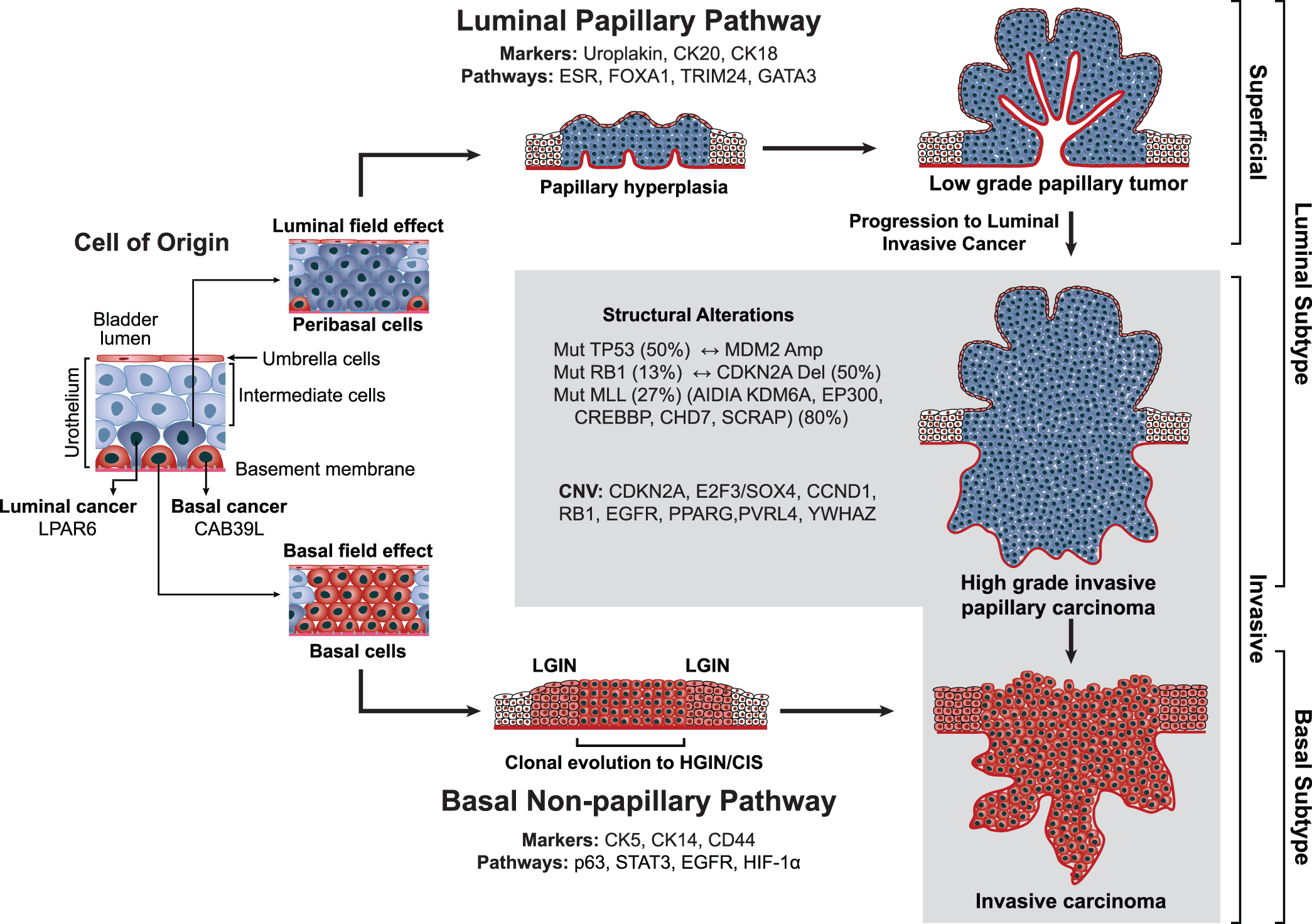
- I added the theory that luminal subtypes come from the luminal layer of the urothelium, and basal ones come from the basal layer
- I combined these ideas
- In the final version I decided to abandon the heatmap, highlighted the most important features in each subtype and simply wrote them in words
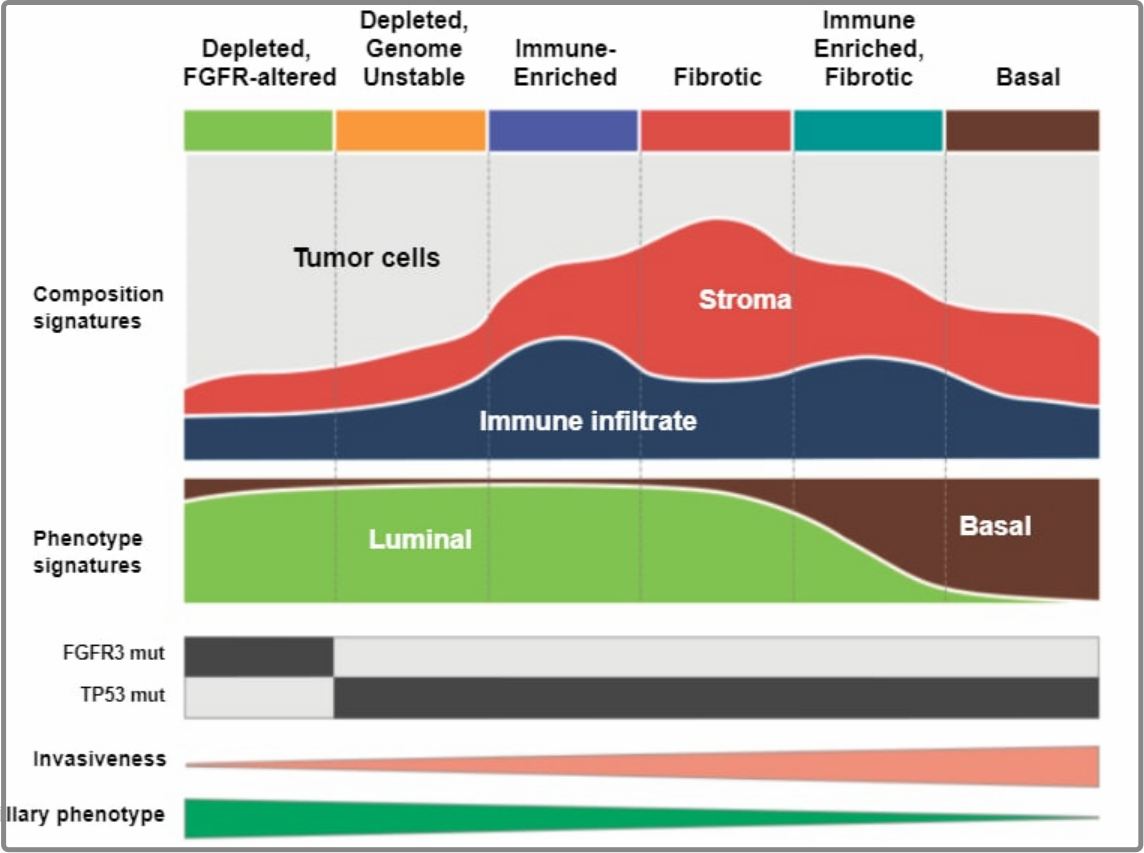
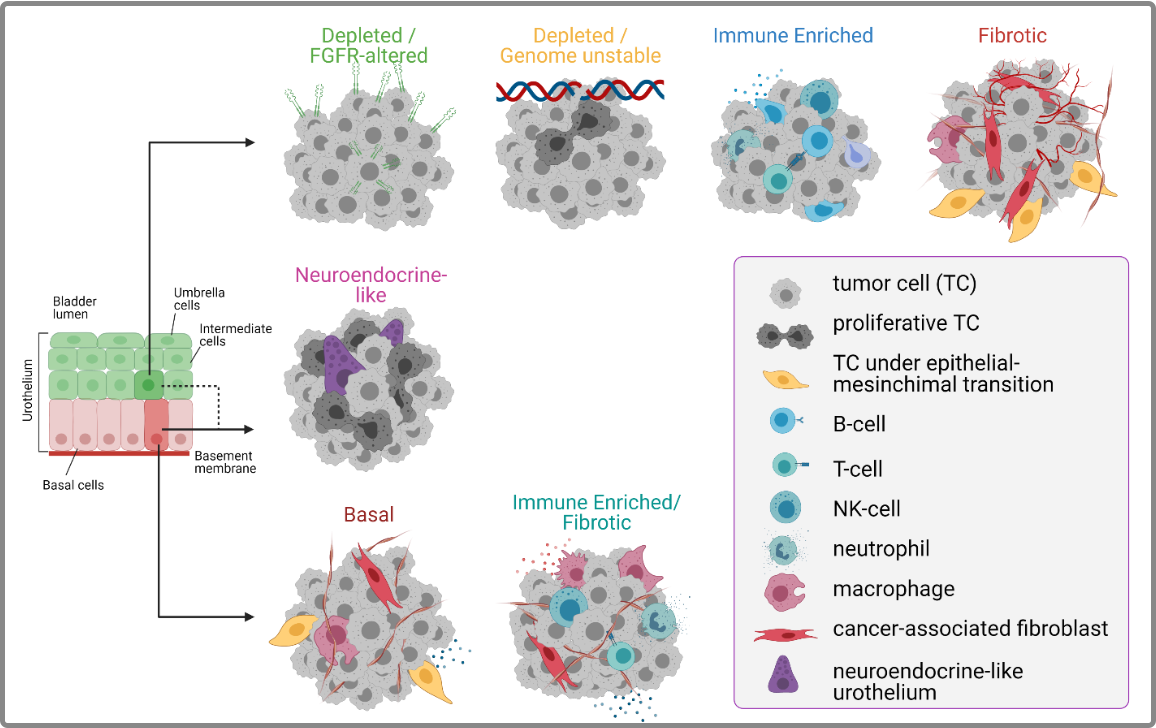
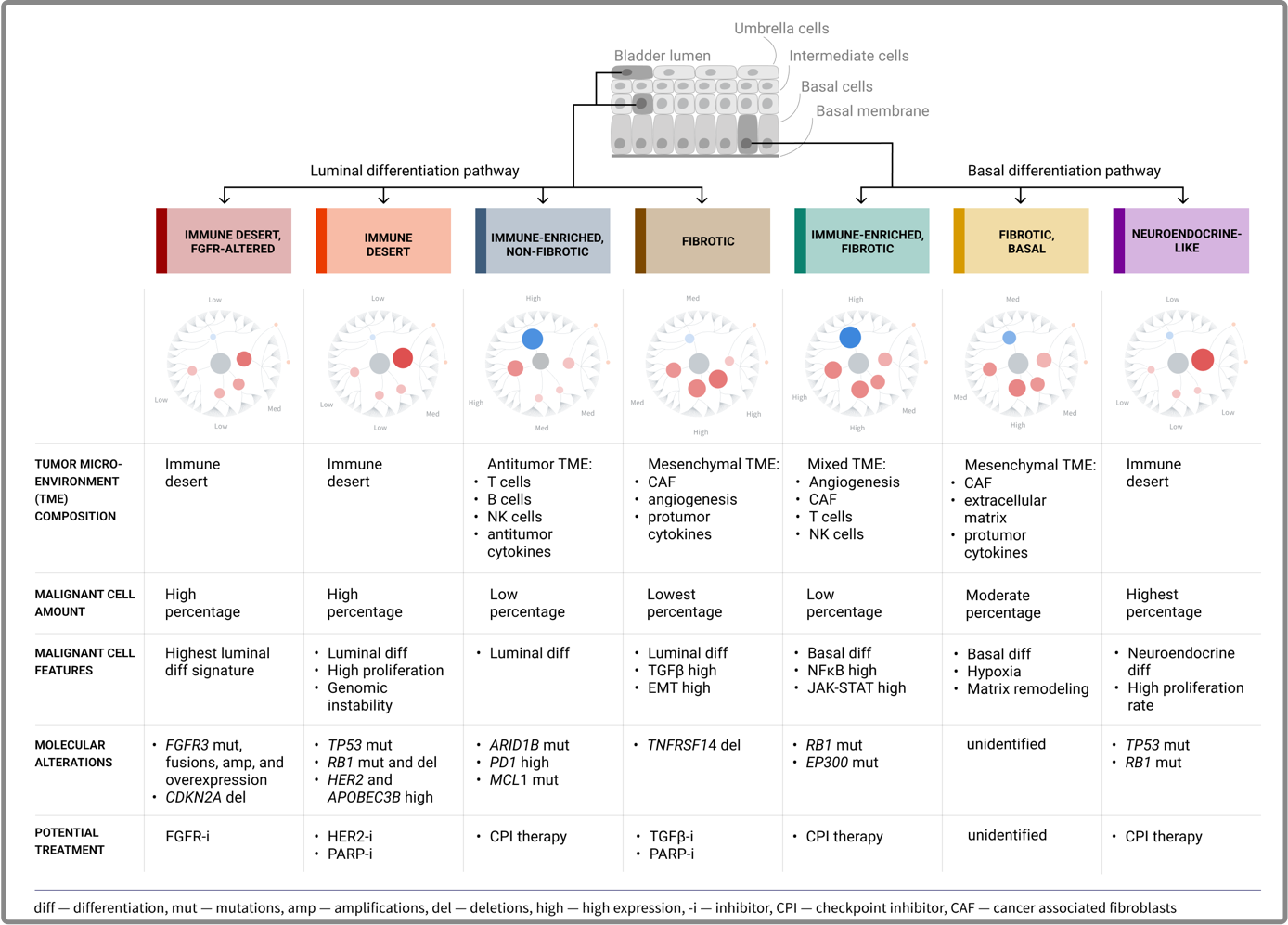
I then passed the draft to the designers; they made it beautiful, and the editors helped with the text. The result is a cool poster that we submitted to ASCO 2022 and to Japan at JCA 2022.